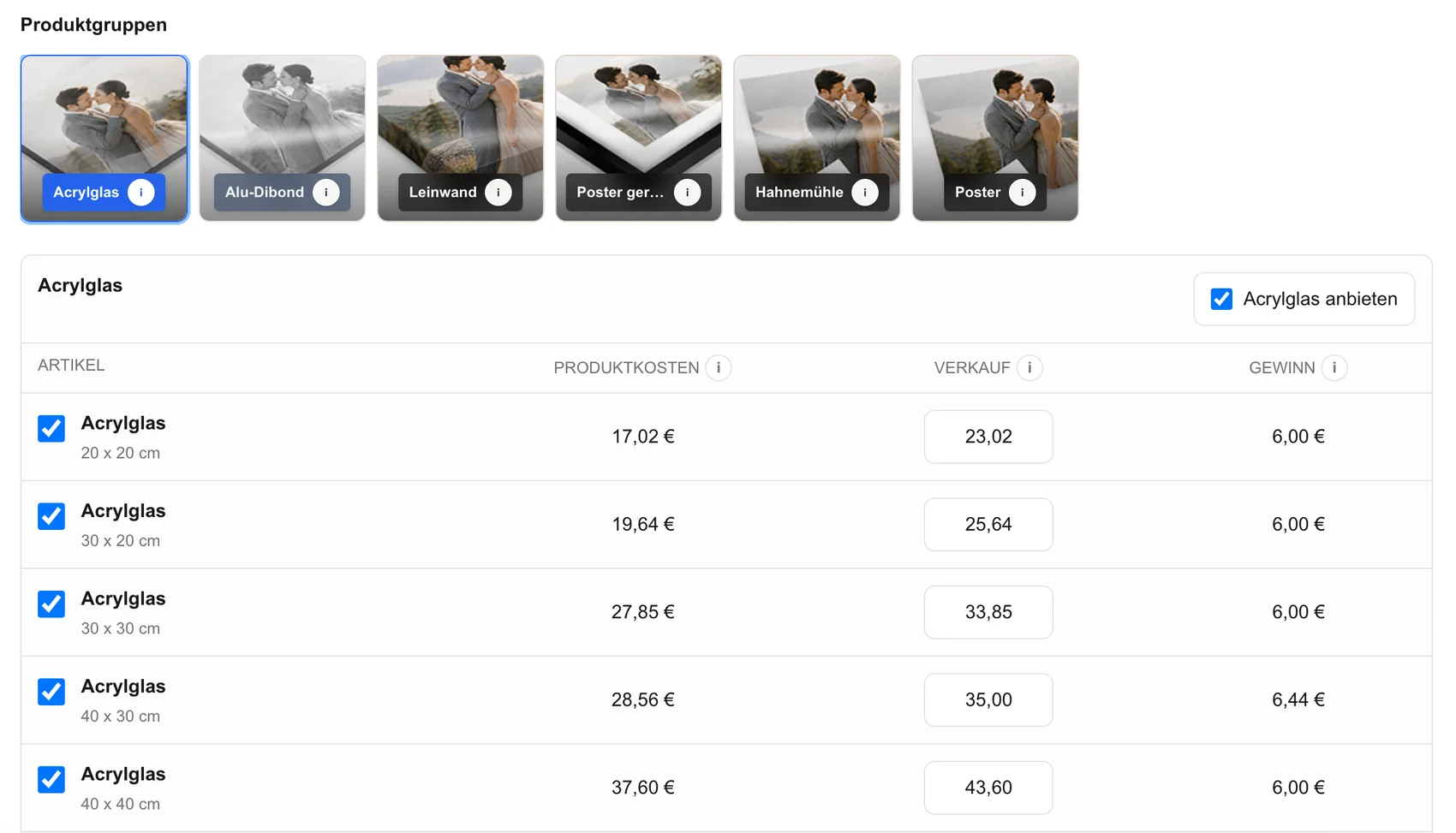
Photo print fulfillment software should preserve a complete, reviewable order from client choice through production handoff: buyer and delivery details, payment state, image reference, product, dimensions, quantity, crop, price, and provider requirements. This page evaluates software and data readiness rather than promising a particular laboratory connection. GalleryDock supports the gallery, configured products, cart, checkout handoff, and order context; the real production route must still be verified. No universal lab integration, automatic manufacturing, packaging, shipping, reconciliation, customer support, or exception-free fulfillment is claimed.
Offer design
Shape a clear print fulfillment workflow offer
A strong print fulfillment workflow page starts with a narrow promise, a truthful product range, and photographs that already have client meaning. Build the offer around that moment instead of around an abstract catalog.
Start with the finished photograph
Use the approved, fully edited image as the starting point. The evaluation begins with the data a paid print order must preserve before any verified lab, export, or manual production handoff can use it safely. The product should support the photograph rather than force every file into the same shape or scale.
Define a focused print fulfillment workflow offer
Choose only the configured products, sizes, and prices that fit photographers evaluating whether software preserves complete, reviewable order data before a print enters production. State what the client receives and keep material, frame, finish, or production wording limited to options that actually exist.
Keep the page's job specific
This is a software-and-data readiness framework, not a claim that GalleryDock connects to every lab or automatically manufactures, packs, ships, reconciles, or supports every order. That boundary prevents this guide from becoming a generic store page and gives clients a clearer answer to the decision they are making now.
Connect the offer to a real assignment
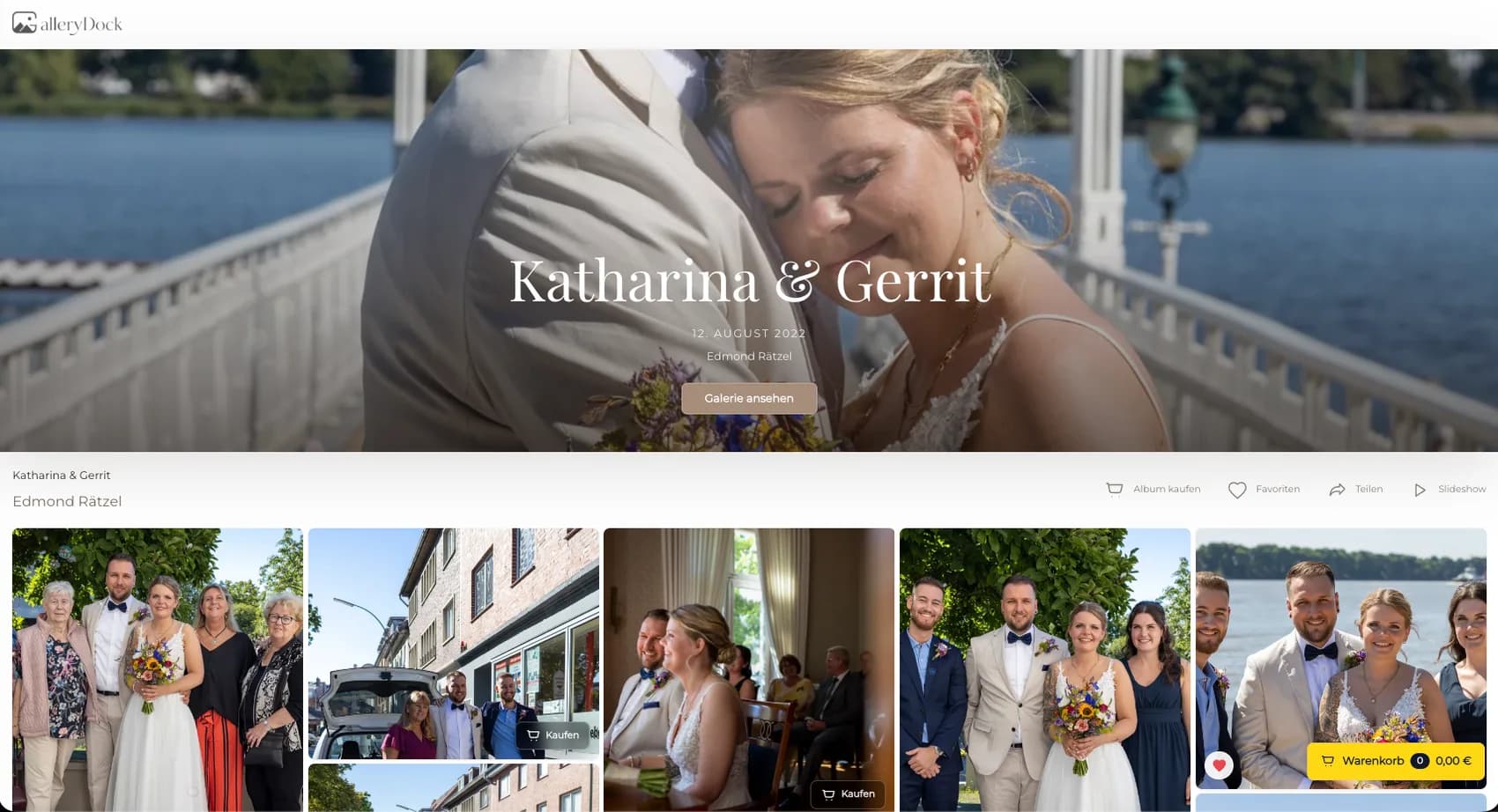
Place the product beside the delivered photographs instead of asking clients to remember image numbers in a separate message. The gallery context keeps the chosen image, product, dimensions, and price connected.
Client decision
Guide the choice at the image
The useful decision is not simply whether the client likes the photograph. It is whether that exact photograph works in the selected format, crop, size, presentation, and budget.
Review orientation and aspect ratio
Compare the photograph's natural composition with the available formats. Protect faces, hands, horizons, architecture, text, and intentional negative space rather than accepting an automatic crop without review.
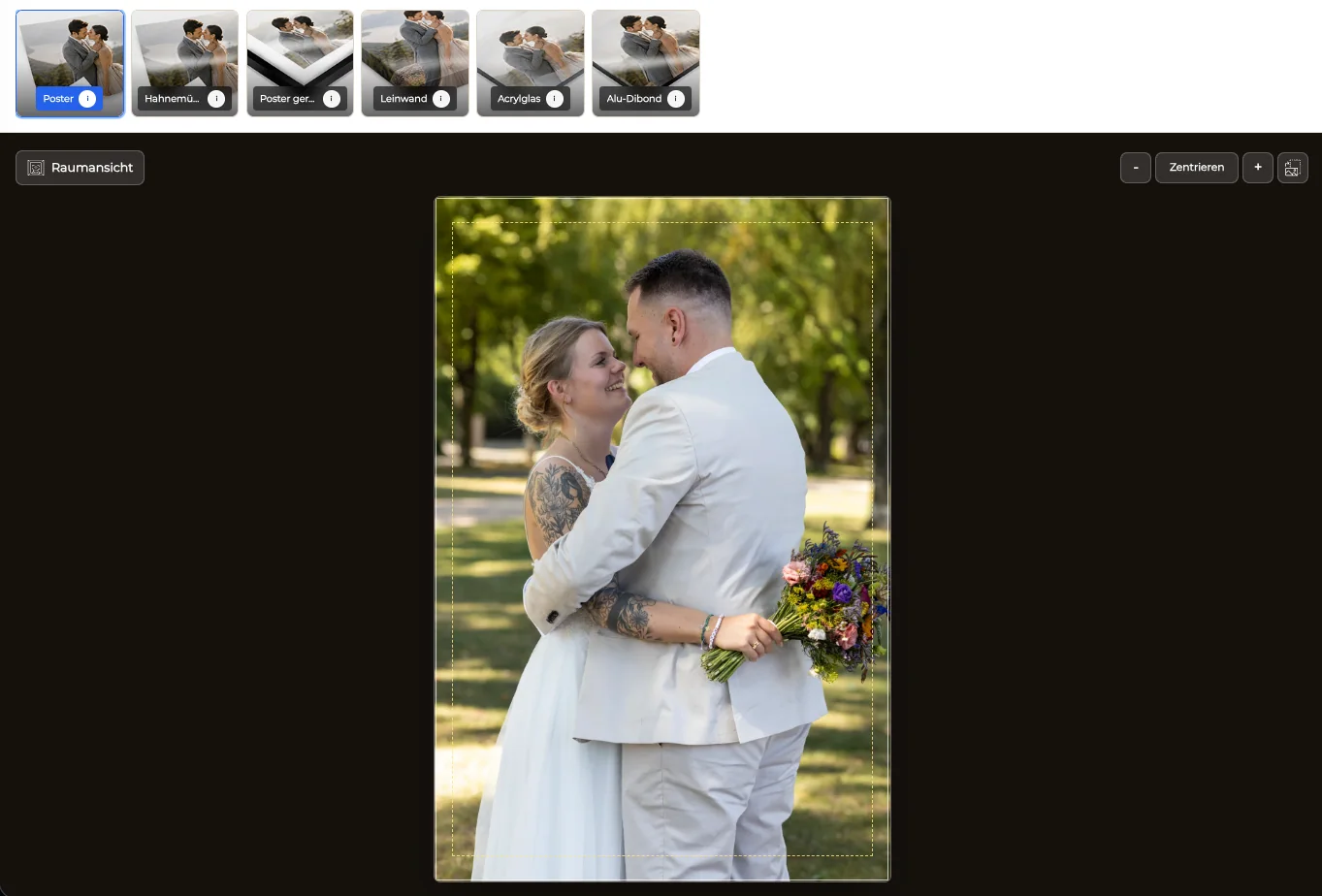
Use the preview as a crop check
Inspect the visible print area and safe area at the exact selected size. A preview helps expose edge problems, but it does not replace the dimensions and production specification tied to the order.
Give size a familiar context
Room context can help a client discuss scale for wall products. Keep exact measurements visible because screen size, viewing distance, and device color cannot guarantee the final physical impression.
Explain price without hiding the product
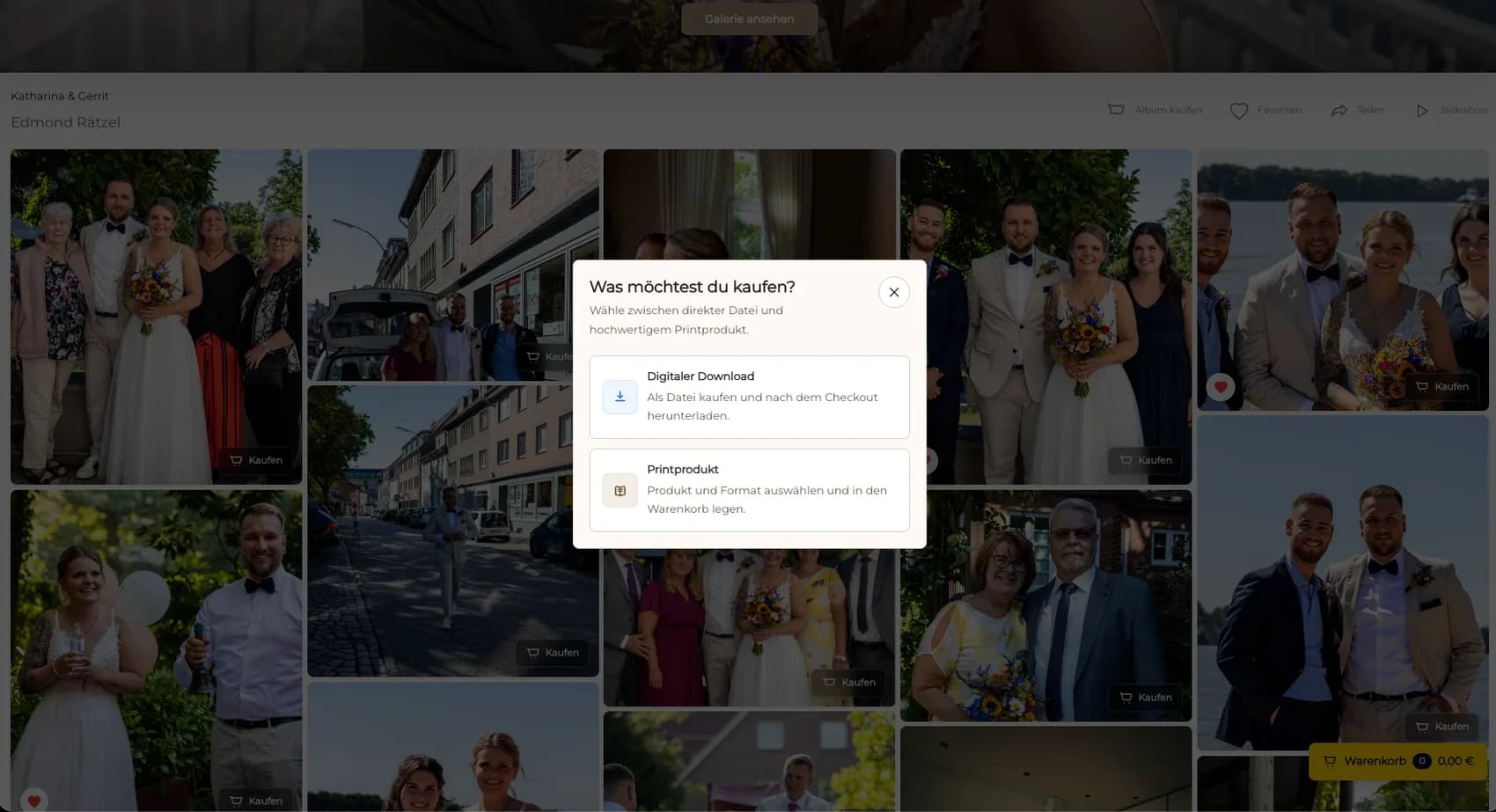
Show the selected product, size, quantity, and price together. If downloads are also available, describe them as a separate outcome so the client does not confuse a file purchase with a physical print.
Order verification
Test the full order path
Treat checkout as the end of the client's selection and the beginning of order review. Verify the order record before it becomes a physical production task.
Test desktop and mobile
Open a representative gallery on both viewport types. Confirm that product names, size choices, price, preview controls, cart actions, and checkout handoff remain readable and usable without horizontal overflow.
Inspect the cart before launch
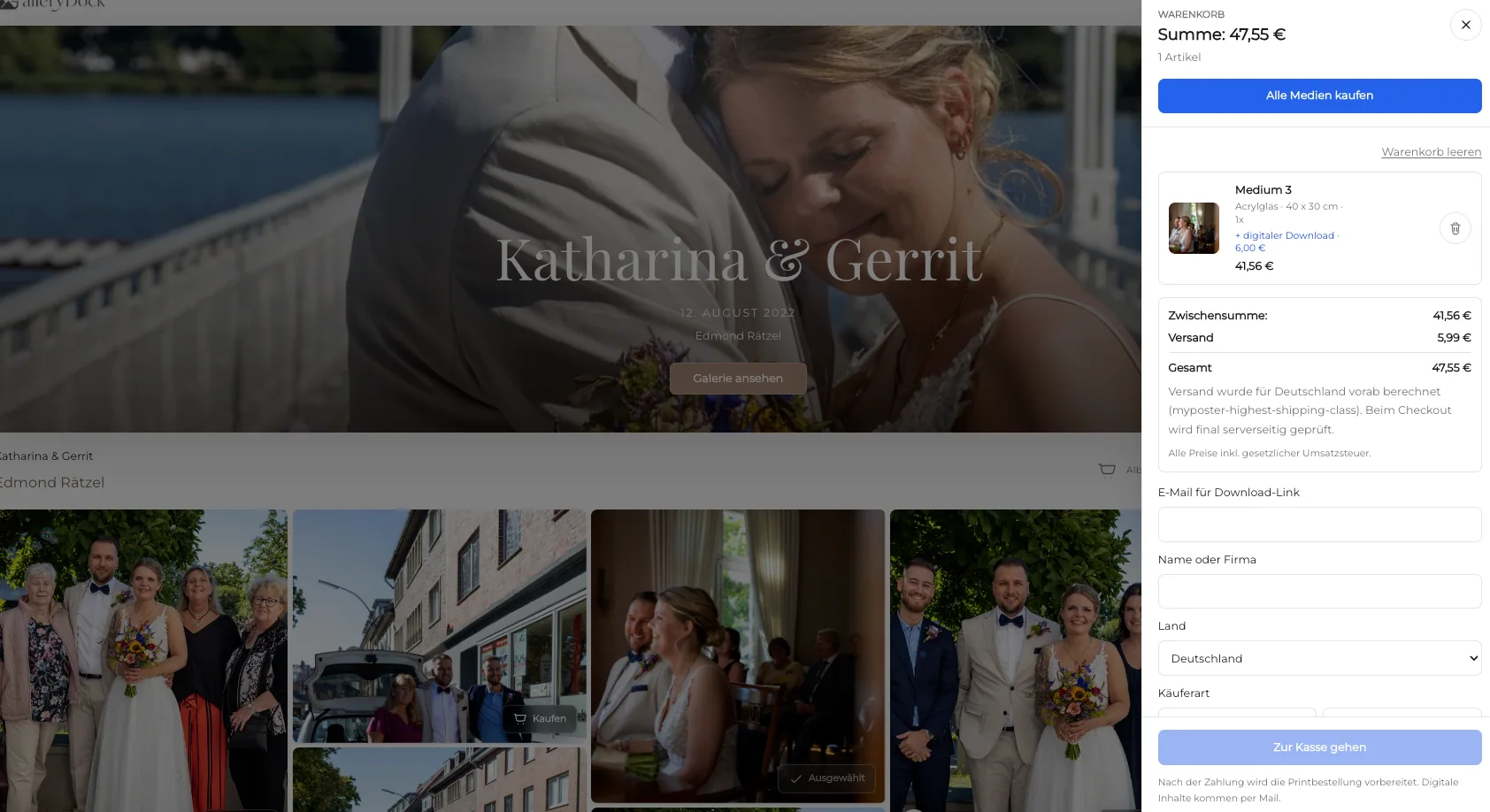
Verify that the intended photograph, product, dimensions, orientation, quantity, and price survive the transition into the cart. A visually correct gallery is not enough if the order data becomes ambiguous.
Keep production claims bounded
GalleryDock can support the configured sales path, but this page does not promise a universal lab, manufacturer, material construction, automatic routing, packing method, shipping speed, or legal outcome.
Review the order before production
Check buyer and delivery details, payment state, image reference, product, dimensions, quantity, crop, price, policies, provider requirements, and exception handling. Resolve an unclear crop or specification before the file enters the photographer's chosen production and delivery workflow.
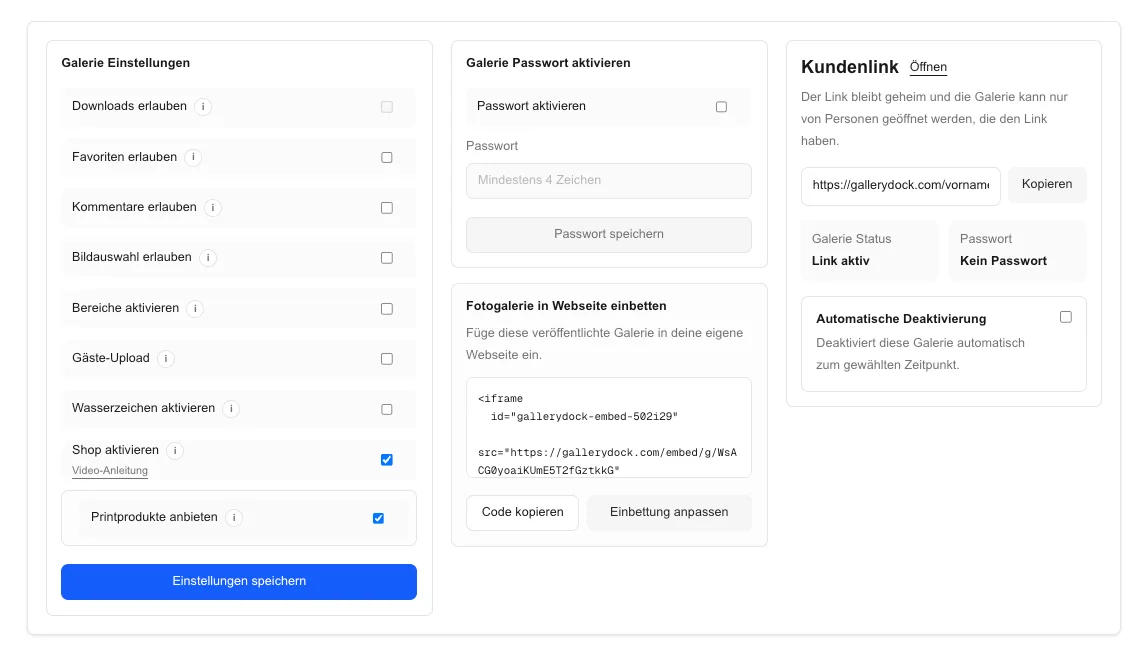
Store settings for configured physical productsUse this store settings for configured physical products view to confirm the product decision with the client before the order moves forward.Digital or print decision captured before fulfillmentUse this digital or print decision captured before fulfillment view to confirm the product decision with the client before the order moves forward.Cart and checkout data for production reviewUse this cart and checkout data for production review view to confirm the product decision with the client before the order moves forward.Product size and price data needed for handoffUse this product size and price data needed for handoff view to confirm the product decision with the client before the order moves forward.Format change that requires deliberate order reviewUse this format change that requires deliberate order review view to confirm the product decision with the client before the order moves forward.Checkout details retained for exception handlingUse this checkout details retained for exception handling view to confirm the product decision with the client before the order moves forward.Product choice retained in the order recordUse this product choice retained in the order record view to confirm the product decision with the client before the order moves forward.
Comparison
Compare print fulfillment workflow choices before publishing
Compare the practical choices around print fulfillment workflow. The useful option is the one that fits the finished photograph, the client's setting, and the exact product configuration—not the option with the loudest label.
Approach
Best for
Tradeoff
Scattered messages
Occasional manual exceptions
High reconstruction risk
Structured order record
Repeatable production review
Still needs a responsible handoff
Native provider connection
A verified supported provider
Availability must be confirmed
Export or manual handoff
Controlled external production
Adds a deliberate review step
Manual lab submission
Use a structured order record before entering data into a provider system.
Verified provider workflow
Confirm the exact supported connection and required fields instead of assuming universality.
Mixed product catalog
Keep product-specific production requirements visible at review time.
Exception handling
Retain a deliberate checkpoint for unsupported sizes, crops, addresses, or provider failures.
Frequently asked questions
Questions about this workflow
Can I sell digital files and print fulfillment workflow together?
Yes. GalleryDock supports digital sales and physical print sales when those products are configured and presented clearly. Keep the file license and the physical print fulfillment workflow outcome distinct so clients understand what each purchase includes.
What should I test first?
Begin with one representative finished image. Check its resolution, orientation, important edge detail, crop, exact product size, price, and the complete cart flow on desktop and mobile before opening the offer to clients.
Does this guide promise production or fulfillment?
No. This is a software-and-data readiness framework, not a claim that GalleryDock connects to every lab or automatically manufactures, packs, ships, reconciles, or supports every order. The photographer remains responsible for the real product specification, production arrangement, taxes, shipping terms, delivery expectations, and any client-facing policies.
How do I keep the choice understandable?
Use a short product range, plain names, exact dimensions, a visible crop, and enough room context to make scale understandable. More options are not automatically better if they make the client's decision harder.
What should I review before production?
Review buyer and delivery details, payment state, image reference, product, dimensions, quantity, crop, price, policies, provider requirements, and exception handling. A preview is decision support, while the configured dimensions and verified order data remain authoritative.
Ideal for photographers who regularly deliver client galleries.
Unlimited galleries
200 GB storage
Photos & videos
Image upload: 100 MB
Video upload: 15 GB
Your own shop for digital sales
Sell print products in your shop
Only 10% shop fee per sale
Your own profile in client galleries
Password-protect client galleries
Use your own logo as a watermark
Let clients select images and mark favorites
Control photo and video downloads
Embed galleries on your own website
Hide GalleryDock branding
Use your own logo in galleries
For regular client delivery
Pro
Monthly
29 EUR
EUR 348 billed yearly. plus VAT
For photographers managing many projects, videos and growing storage.
Unlimited galleries
1 TB storage
Photos & videos
Image upload: 100 MB
Video upload: 30 GB
Your own shop for digital sales
Sell print products in your shop
Only 5% shop fee per sale
Your own profile in client galleries
Password-protect client galleries
Use your own logo as a watermark
Let clients select images and mark favorites
Control photo and video downloads
Embed galleries on your own website
Hide GalleryDock branding
Use your own logo in galleries
For regular client delivery
Test one print fulfillment workflow order from image to cart
Choose one finished photograph, configure the relevant print fulfillment workflow option, inspect the crop and size, and test the complete client path from gallery view to cart before publishing.