Define the real client journey
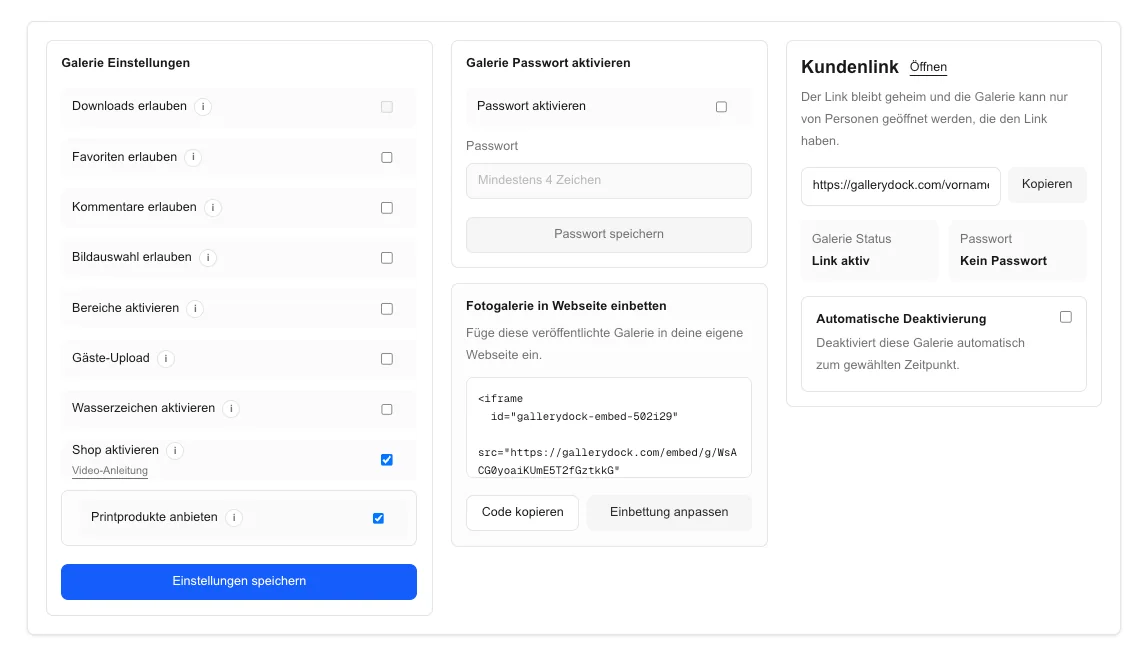
Configure the gallery and products first, place the provided code in a suitable website container, publish, and verify the complete journey on the actual domain.
Photo print store website embed
Embed a photo print store on your website by placing a configured GalleryDock gallery in an appropriate code area and testing the published desktop, mobile, product, cart, and checkout path.

Quick answer
Embed a photo print store on your website by placing a configured GalleryDock gallery in an appropriate code area and testing the published desktop, mobile, product, cart, and checkout path. This workflow uses an appropriate HTML or embed area. It does not claim a native domain connection, CMS app, plugin, theme integration, universal builder compatibility, or synchronization.
Offer design
A useful website-embedded photo print store workflow begins with a clear audience, a finished assignment, and a truthful product path.
Configure the gallery and products first, place the provided code in a suitable website container, publish, and verify the complete journey on the actual domain.
Select only finished photographs that support website-embedded photo print store. Remove technical misses and repetitive frames before the buyer sees the offer.
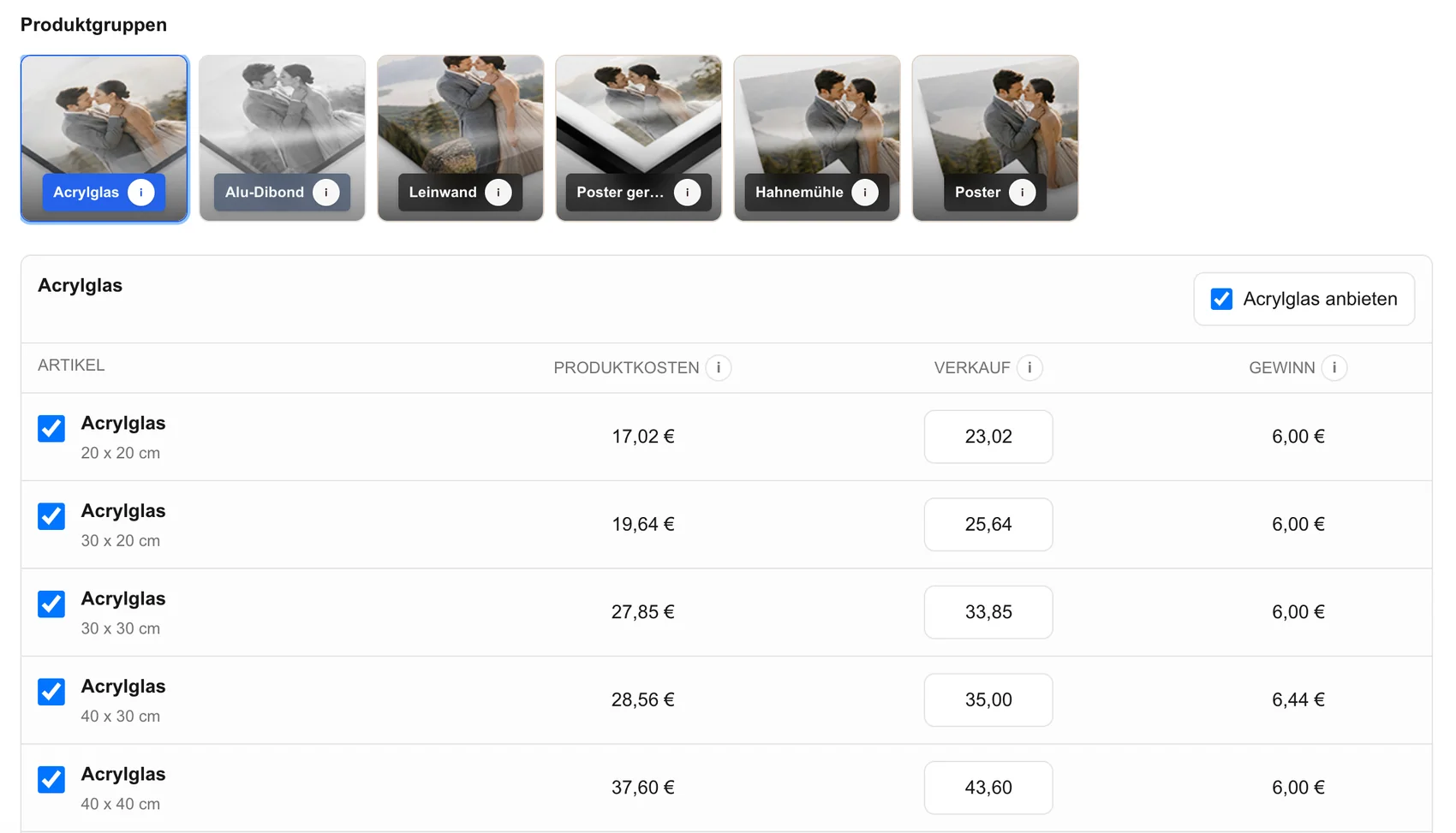
Choose configured products, dimensions, prices, and access settings for photographers placing a configured GalleryDock print store inside their own website. Keep the offer narrow enough to understand at the image.
This workflow uses an appropriate HTML or embed area. It does not claim a native domain connection, CMS app, plugin, theme integration, universal builder compatibility, or synchronization.
Client decision
The buyer should understand which photograph is being ordered, what the configured product includes, and why the selected format fits.
Publish the embed on the real domain, then test container width, height, scrolling, mobile behavior, photograph selection, products, cart, checkout, and the route back to the host website.
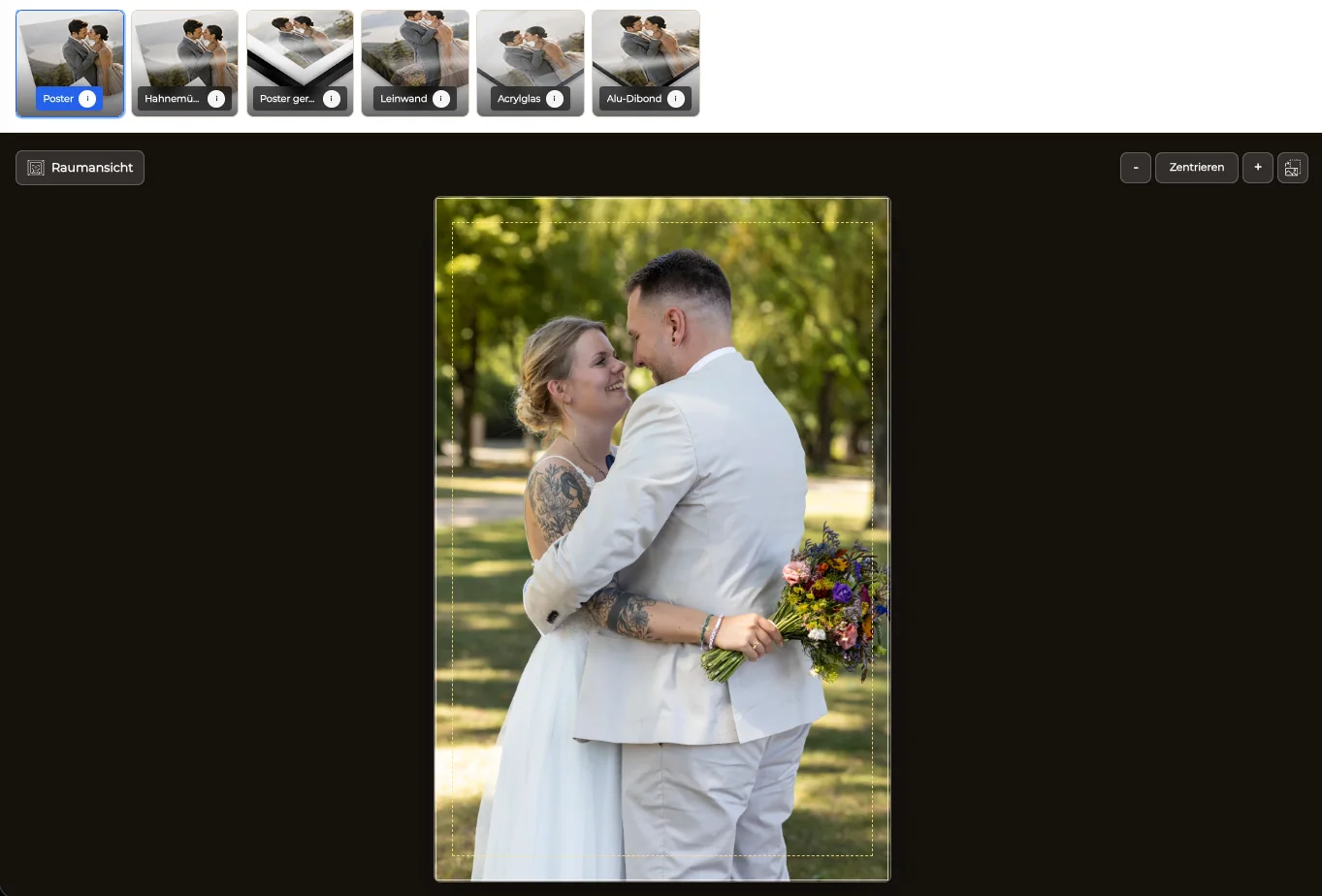
Compare portrait and landscape formats with the original composition. Protect faces, hands, instruments, architectural lines, horizons, text, and intentional negative space.
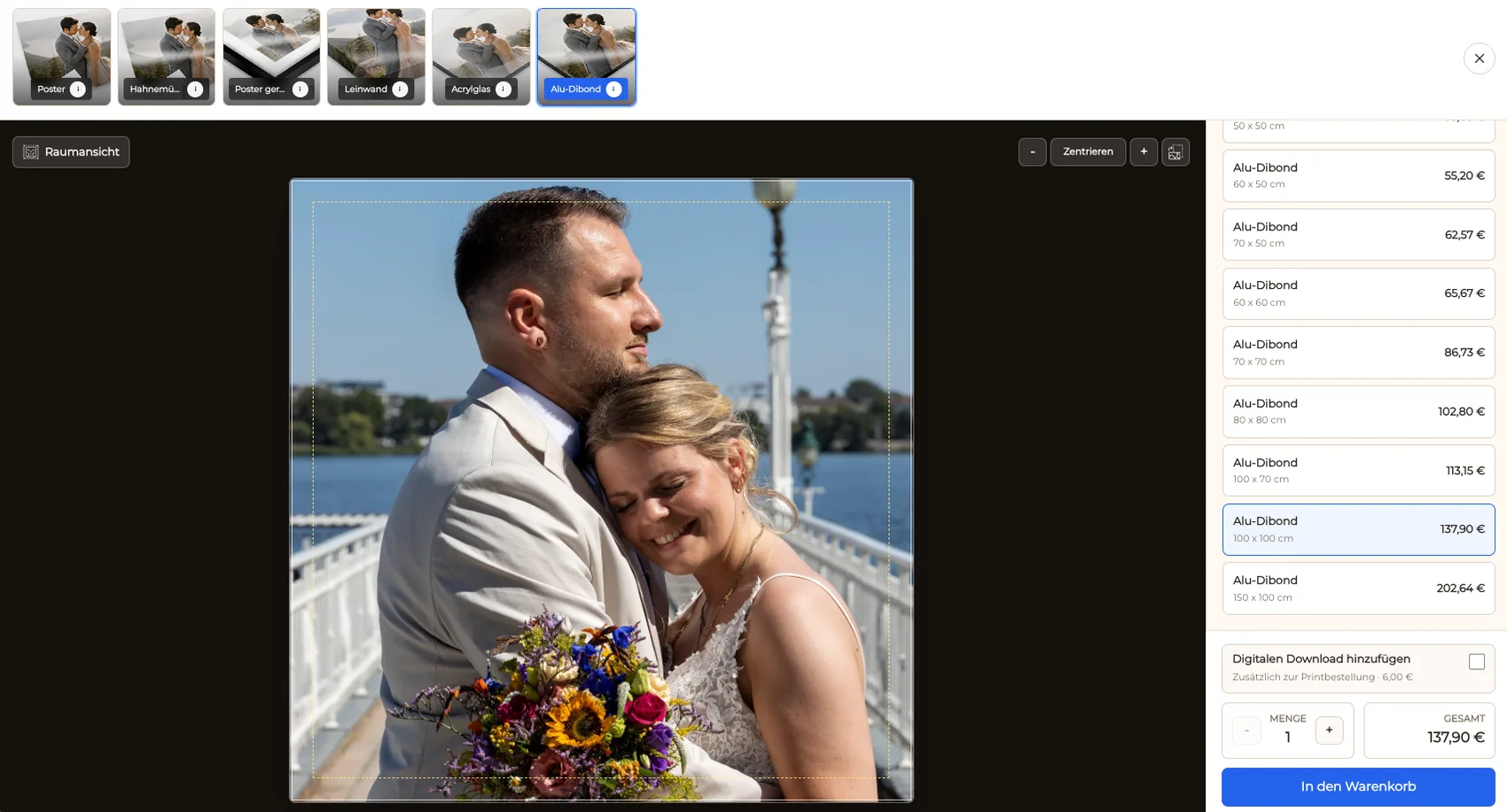
Inspect the visible print area and safe area at the selected size. A preview helps identify edge problems but does not replace exact dimensions or a verified production specification.
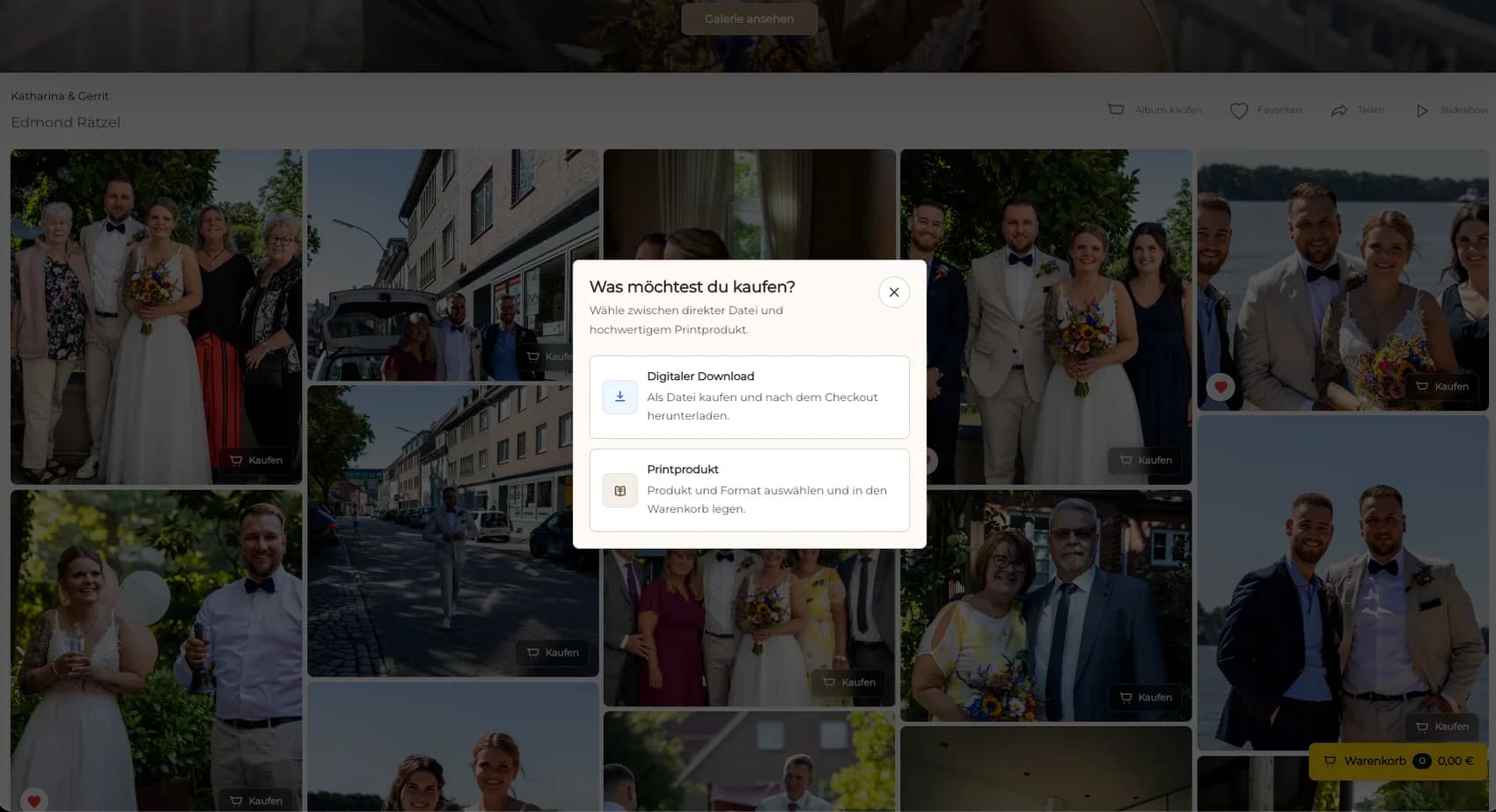
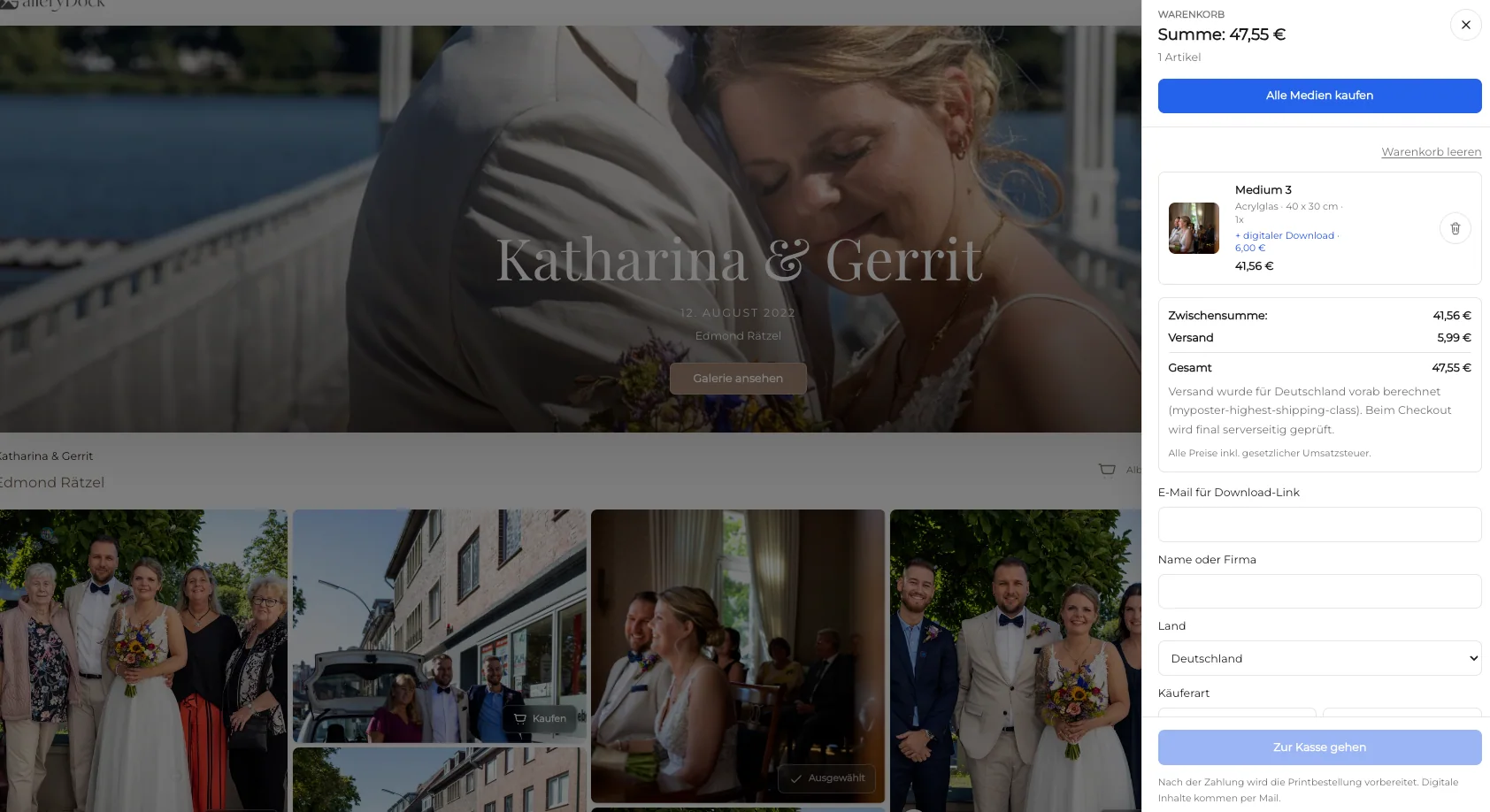
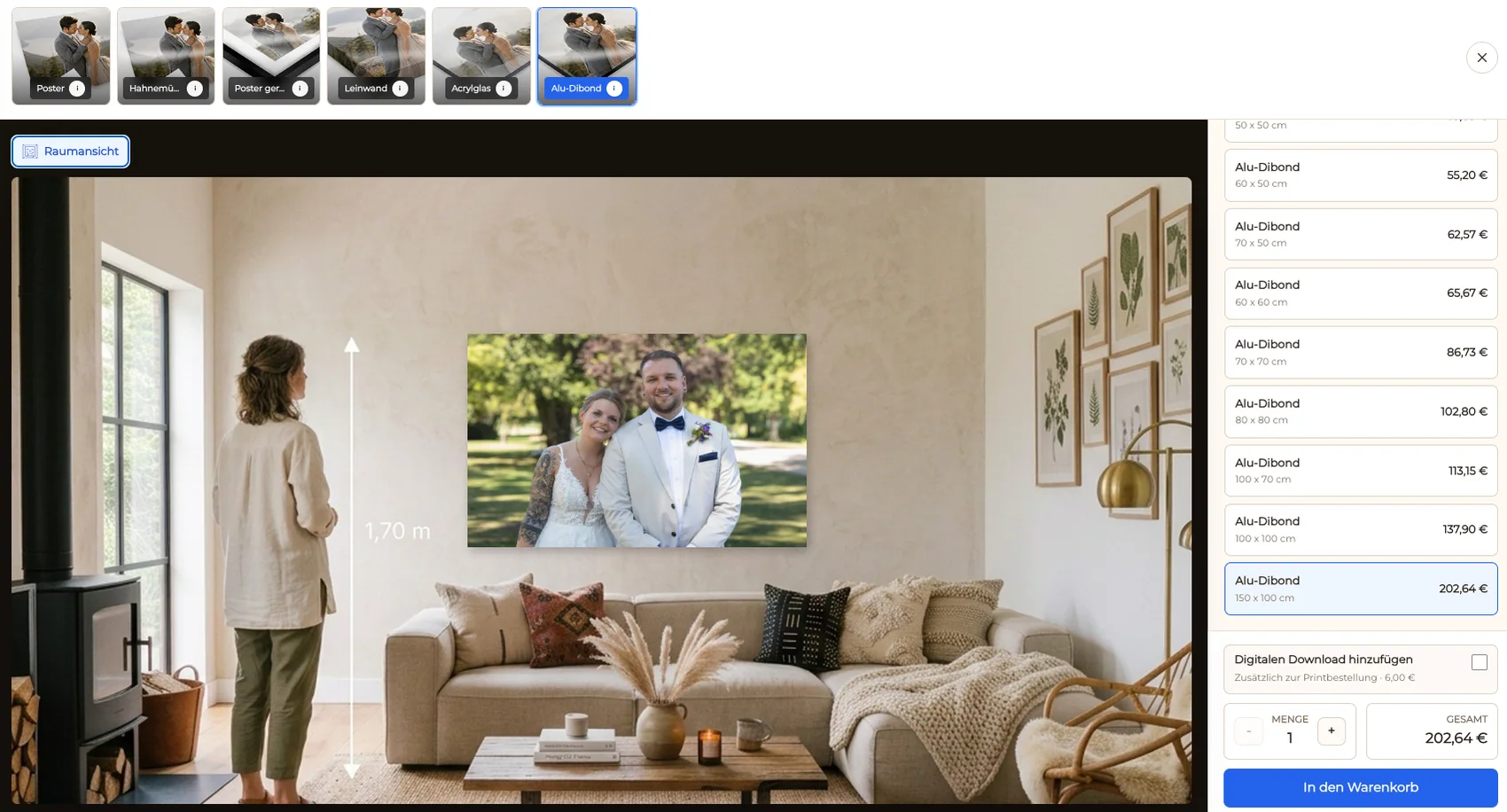
Show product, size, quantity, and price together. If digital files are also available, describe them as a separate outcome so the client understands what enters the cart.
Order verification
Treat checkout as the end of client selection and the beginning of a controlled order review.
Open a representative gallery on desktop and mobile. Confirm that access, product names, dimensions, prices, preview controls, cart actions, and checkout handoff remain readable without horizontal overflow.
Verify that the intended photograph, product, dimensions, orientation, quantity, and price survive the transition into the cart.
Review the final source file, crop, product specification, buyer data, and payment state before production. Resolve uncertainty before it becomes a delivery problem.
GalleryDock supports the configured gallery-to-order path. Production providers, manufacturing, packing, shipping, taxes, licensing decisions, and business results remain separate verified responsibilities.
Comparison
Compare the practical ways to handle website-embedded photo print store. The useful route is the one that keeps the finished photograph, configured product, buyer context, and order record connected.
| Approach | Best for | Tradeoff |
|---|---|---|
| Gallery-based order | photographers placing a configured GalleryDock print store inside their own website | Requires a prepared gallery and product setup |
| Manual email order | An exceptional custom request | Separates image, specification, and payment |
| General ecommerce catalog | Many unrelated product categories | Loses the assignment context |
| Download-only gallery | Digital delivery without physical products | Does not guide a physical print decision |
Keep the gallery inside the photographer's brand context.
Test one focused collection and buying path.
Verify height, scrolling, and checkout.
Retest the published embed after layout changes.
Frequently asked questions
It needs an appropriate HTML or embed area that can display the configured GalleryDock gallery.
No. The workflow uses the website's supported embed or code area.
Check width, height, scrolling, mobile layout, product selection, cart, and checkout on the real domain.
Yes, when those outcomes are configured for the gallery.
No. Container and script behavior must be tested in the actual published environment.
Related resources
Pricing
Free forever
0 EUR
EUR 0 per month
Perfect for sharing your first galleries professionally.
Start free, no credit card required
Monthly
19 EUR
EUR 228 billed yearly. plus VAT
Ideal for photographers who regularly deliver client galleries.
For regular client delivery
Monthly
29 EUR
EUR 348 billed yearly. plus VAT
For photographers managing many projects, videos and growing storage.
For regular client delivery
Prepare one representative assignment, configure the website-embedded photo print store path, inspect every visible choice, and test the journey from gallery view to cart before publishing.
Create a free account