01
Name the decision
Write the question in operational language: What does GalleryDock cost for a photography business? A clear question prevents a broad software search from replacing the real client or studio problem.
Client gallery pricing for photographers
Client gallery pricing for photographers: compare current GalleryDock Free, Base, and Pro plans, storage, visible-gallery limits, shop fees, and cost per assignment.

Quick answer
GalleryDock currently offers Free, Base, and Pro choices; the right price depends on measured active work, storage, billing interval, shop use, and annual assignment volume. GalleryDock prices, limits, fees, and plan details can change; verify the live pricing surface and billing catalog before purchasing, and do not infer taxes, profit, demand, or a guaranteed return from these examples.
Decision frame
A useful comparison begins with the assignment and responsibility, not with the longest feature list.
01
Write the question in operational language: What does GalleryDock cost for a photography business? A clear question prevents a broad software search from replacing the real client or studio problem.
02
GalleryDock owns the configured client-gallery experience; the photographer owns package design, plan choice, source archives, pricing, taxes, fulfillment, and client communication. List the responsibilities that stay outside this decision before comparing interfaces, plans, or provider claims.
03
the current billing catalog, live pricing page, active storage, overlapping galleries, completed assignment count, and eligible sales Capture the date and source for facts that can change, and distinguish verified product behavior from assumptions or marketing language.
04
Start with one representative assignment on Free, followed by a calculation using current annual project volume. Keep original files, existing links, client records, and the previous delivery option available until the test has finished successfully.
Representative pilot
A controlled real-world assignment exposes access, instruction, review, delivery, and support requirements that a checklist cannot show.
01
Test a curated set that resembles paid work in file count, orientation, client roles, delivery expectations, optional products, and device mix. A tiny demo can hide the exact friction that appears in production.
02
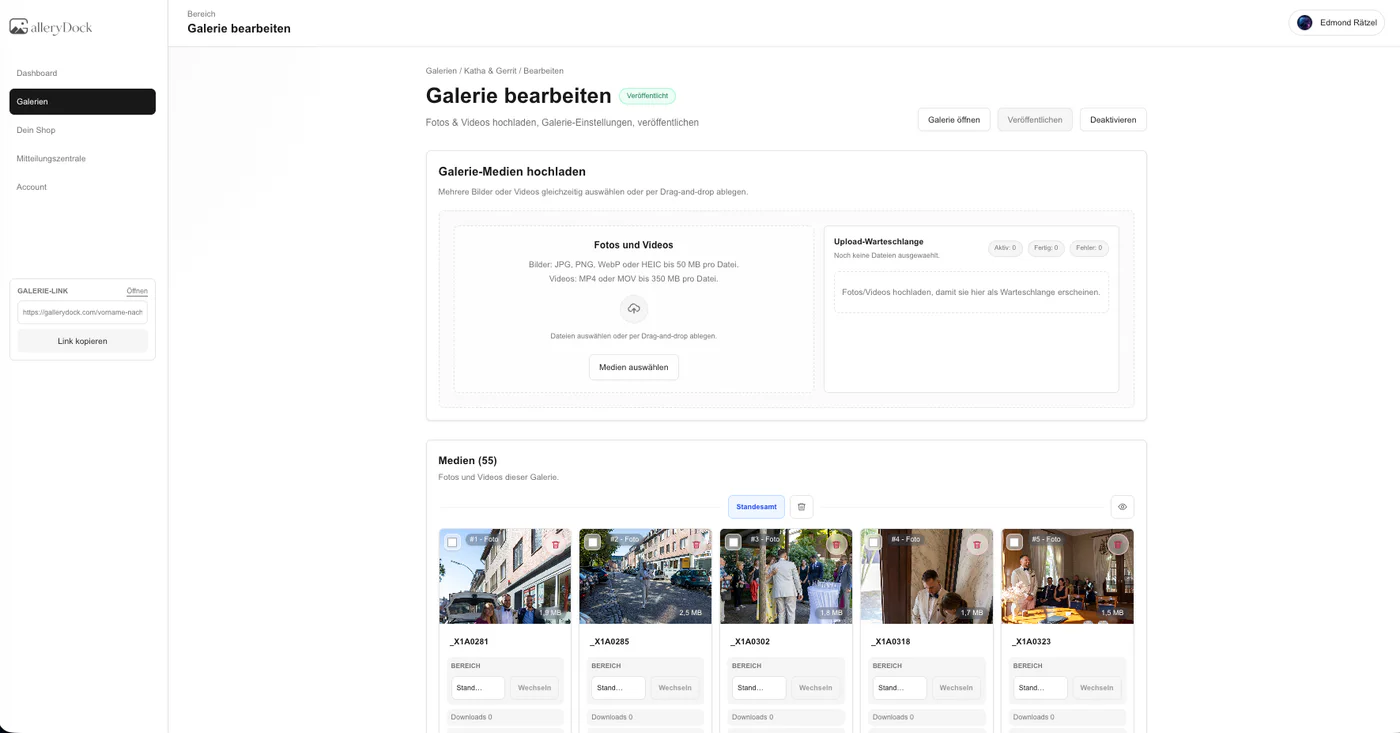
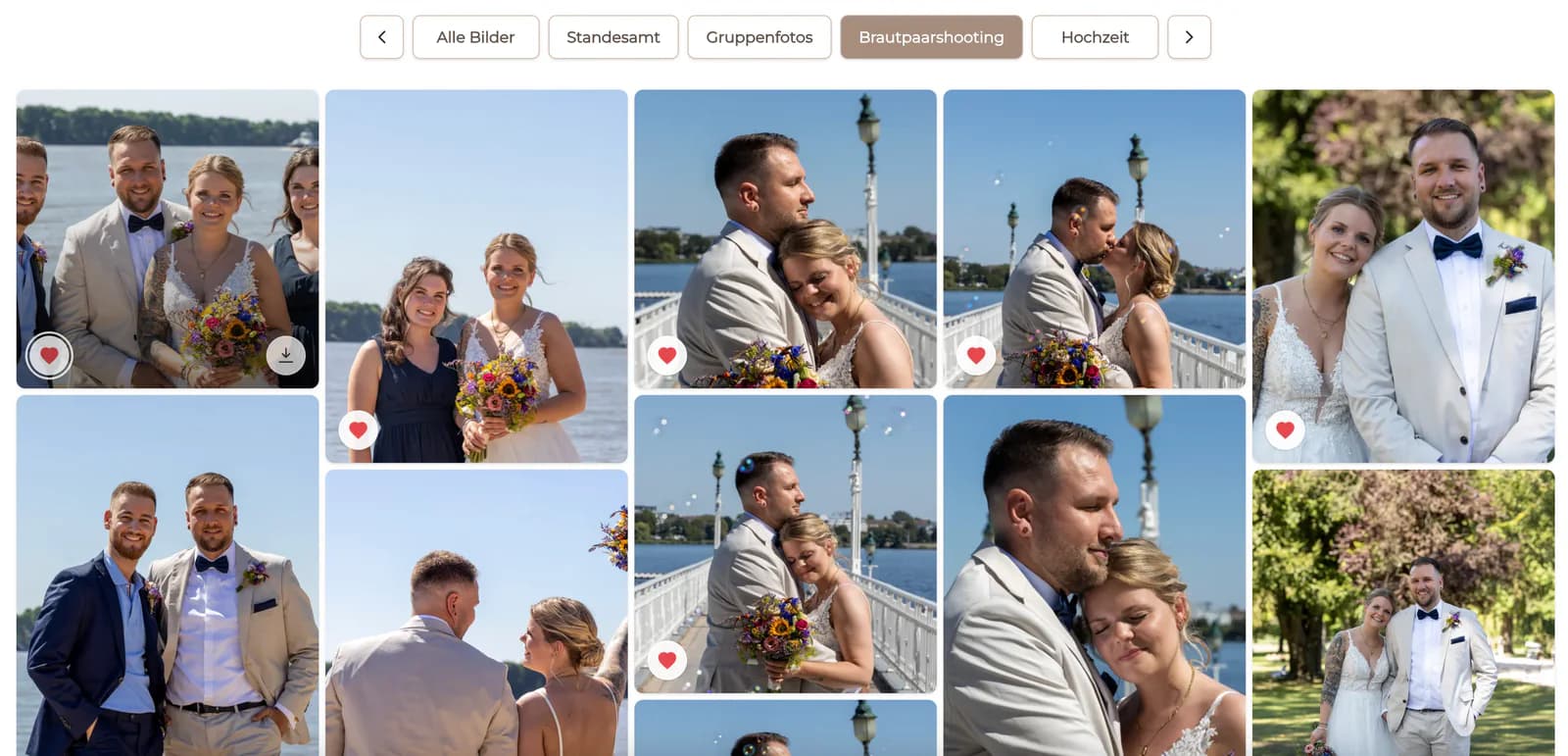
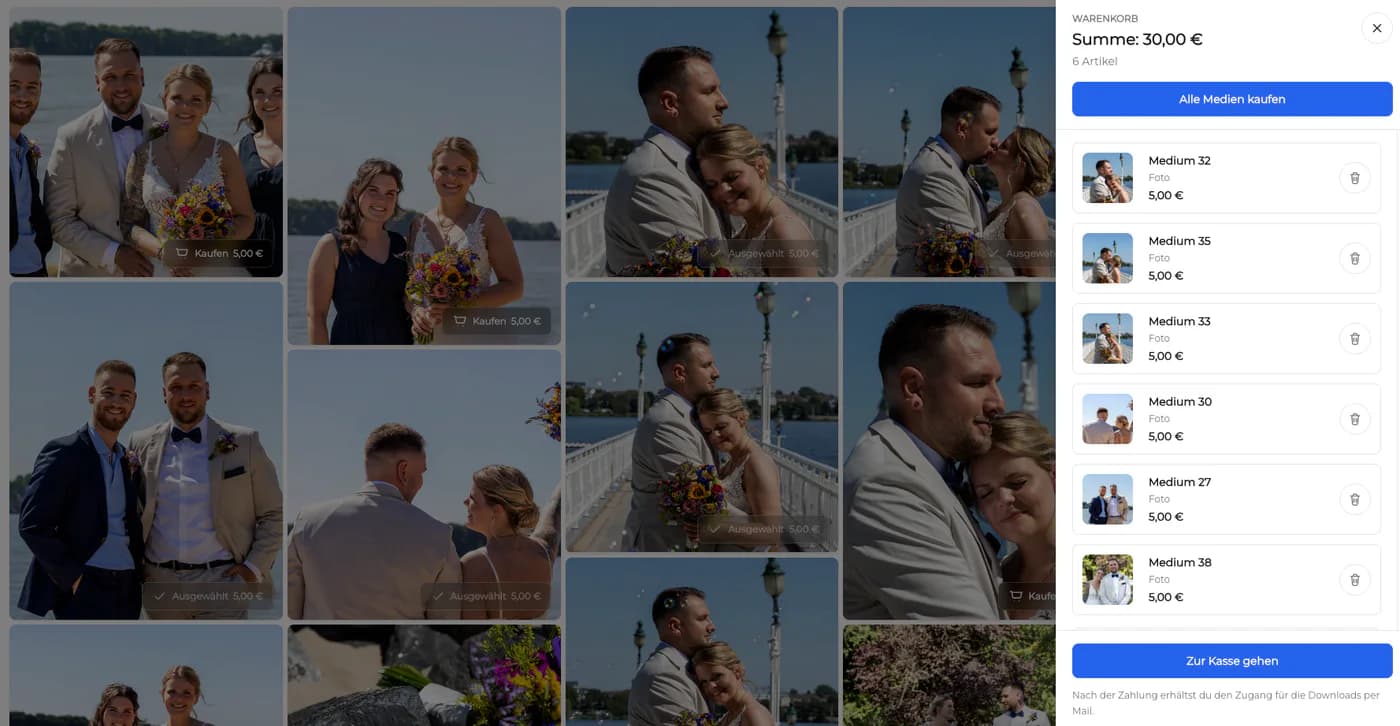
Observe invitation, access, viewing, the requested decision, and selection, feedback, controlled download, and any configured digital or physical purchase. Do not count an administrator preview as proof that a first-time client understands the next action.
03
Open the same assignment on both viewport classes. Check image detail, readable instructions, controls, feedback, selection state, download clarity, optional store choices, and content overflow.
04
Record where clients pause, ask for clarification, repeat an action, abandon a step, or use a separate channel. Those observations are more useful than a general statement that the gallery looks professional.
Cost model
The subscription is one operating input. A useful calculation combines current plan facts with real assignments and keeps business assumptions visible.
01
Compare monthly and annual amounts on the same net basis, note that VAT is additional, and recheck the current catalog before publication or purchase.
02
Count client-ready photographs and videos that need to remain active. RAW masters, editing files, and redundant archives belong in a separate storage plan.
03
Calculate a per-assignment reference from work the studio actually completes. Forecasts can be modeled separately but must not be presented as guaranteed bookings.
04
A current shop fee affects eligible transactions, but margin still depends on product cost, labor, taxes, support, fulfillment, refunds, and actual client demand.
Operational boundaries
A robust workflow makes ownership, exclusions, and recovery visible instead of relying on one interface to solve every studio responsibility.
01
A client gallery does not replace source-file storage, redundant backup, contracts, invoicing, bookkeeping, tax work, licensing records, or a CRM. Name which system remains authoritative for each responsibility.
02
Clients should understand which files, reviews, downloads, digital products, or physical prints are included and which are optional. Software availability does not define the package or guarantee demand.
03
The largest risk is choosing from an old price, an unrealistic project count, or storage that includes RAW archives instead of curated client-ready media. Decide who responds, where the incident is recorded, and how the client receives the agreed result if the preferred path is unavailable or misunderstood.
04
GalleryDock prices, limits, fees, and plan details can change; verify the live pricing surface and billing catalog before purchasing, and do not infer taxes, profit, demand, or a guaranteed return from these examples. Recheck dynamic plan, provider, policy, price, and feature information at the moment it affects a purchase or migration decision.
Adoption and review
The final choice should be understandable, measurable, reversible, and reviewable after real assignments—not merely defensible on launch day.
01
Use cost per completed assignment, active storage headroom, overlapping gallery volume, client support time, successful delivery, and eligible sales after fees. Compare the result with the current process rather than with an imagined perfect workflow.
02
Record the selected plan, billing interval, current net price, tax treatment, storage assumption, active-gallery volume, shop-fee assumption, and the date every dynamic fact was checked. Include the owner, evidence, scope, exclusions, chosen path, fallback, and next review date so another team member can understand why the decision was made.
03
Use selection, feedback, controlled download, and any configured digital or physical purchase. Expand only after representative jobs complete without hidden manual work, missing records, or recurring client confusion.
04
Recalculate after a busy period, a material storage change, a plan change, or a shift in the number of simultaneous assignments. A workflow that succeeds once may still fail with a larger gallery, different client, mixed media, additional reviewer, or another team member.

Comparison
Use the table as a shortlist, then verify the decision with one representative client assignment and current source information.
| Current choice | Practical fit | Boundary to verify |
|---|---|---|
| Free: €0 net | A controlled pilot with 1 GB and up to three visible galleries | The current 15% shop fee and plan limits must be verified before client work |
| Base monthly: €29 net | Studios that want 200 GB and unlimited visible galleries without an annual commitment | Monthly flexibility costs more across a full year than the current annual option |
| Base yearly: €228 net | Recurring client work that fits 200 GB and benefits from a predictable annual budget | The annual payment is committed upfront and the current 10% shop fee still applies |
| Pro monthly: €44 net | Higher active volume that needs 1 TB while preserving monthly flexibility | Capacity does not replace archive, backup, curation, or a defined client process |
| Pro yearly: €348 net | Established studios that can justify 1 TB and the annual commitment | The current 5% shop fee is not a promise of margin, sales, or lower total operating cost |
| Cost per completed assignment | Photographers comparing the subscription with real annual project volume | Use completed representative jobs; do not divide by hoped-for bookings or ignore labor and taxes |
A photographer runs two representative portrait assignments, measures curated storage and client questions, and upgrades only if current limits constrain the real workflow.
A studio with recurring assignments compares €29 monthly with €228 yearly using actual cash flow and completed projects, not a promotional assumption.
A photo and video team measures active client-ready media and support effort before deciding whether 1 TB and the current lower shop fee justify Pro.
Frequently asked questions
GalleryDock currently offers Free, Base, and Pro choices; the right price depends on measured active work, storage, billing interval, shop use, and annual assignment volume. GalleryDock prices, limits, fees, and plan details can change; verify the live pricing surface and billing catalog before purchasing, and do not infer taxes, profit, demand, or a guaranteed return from these examples.
Begin with one representative assignment on Free, followed by a calculation using current annual project volume. Keep the first test narrow enough to reverse, but realistic enough to expose client questions, team effort, mobile behavior, and the final handoff.
Use the current billing catalog, live pricing page, active storage, overlapping galleries, completed assignment count, and eligible sales. A feature label, polished screenshot, or provider reputation is not evidence that the workflow fits your assignments, packages, clients, and operating responsibilities.
GalleryDock owns the configured client-gallery experience; the photographer owns package design, plan choice, source archives, pricing, taxes, fulfillment, and client communication. Keep source files, redundant backups, contracts, accounting, tax decisions, and legal records in the systems responsible for them.
The largest risk is choosing from an old price, an unrealistic project count, or storage that includes RAW archives instead of curated client-ready media. Preserve the current process until the pilot has completed, document exceptions, and never remove the only working client or delivery path during evaluation.
Review cost per completed assignment, active storage headroom, overlapping gallery volume, client support time, successful delivery, and eligible sales after fees. Record the result after several representative jobs so the decision survives different clients, devices, project sizes, and team members.
Related resources
Pricing
Free forever
0 EUR
EUR 0 per month
Perfect for sharing your first galleries professionally.
Start free, no credit card required
Monthly
19 EUR
EUR 228 billed yearly. plus VAT
Ideal for photographers who regularly deliver client galleries.
For regular client delivery
Monthly
29 EUR
EUR 348 billed yearly. plus VAT
For photographers managing many projects, videos and growing storage.
For regular client delivery
Use current GalleryDock plan facts, realistic active storage, completed assignments, and eligible sales to compare Free, Base, and Pro without pretending that software alone creates profit.
Create a free account