Photo products or a client-gallery sales workflow

CEWE Alternative for Photographers

Compare CEWE photo-product ordering with a photographer-led client gallery workflow for presenting commissioned images and offering eligible digital products or physical prints.

  • Separate consumer product creation from commissioned-gallery selling
  • Keep image, product, crop, price, and client context connected
  • Verify production and fulfillment responsibilities before launch
GalleryDock client gallery as a CEWE workflow alternative

Quick answer

A CEWE alternative for photographers should be chosen by workflow: consumer photo-product creation serves a different job from presenting commissioned work, guiding client choices, and keeping an optional sale attached to the approved image. GalleryDock does not claim a CEWE integration, automatic migration, production-lab connection, shipping service, or feature-for-feature replacement.

Decision frame

Define the job before comparing software

A dependable decision starts with the client responsibility, business owner, evidence, and fallback—not with the longest feature list.

01

Write the operational question

State the decision as a workflow question: Do you need a consumer photo-product ordering path or a photographer-controlled client gallery with optional sales? This keeps branded search intent connected to a real assignment instead of turning the page into an unsupported market ranking.

02

Separate product centers

CEWE owns its documented consumer product and ordering experience; GalleryDock owns the configured gallery, client context, eligible product presentation, cart, and checkout handoff. Write down what belongs to the gallery, what stays in another system, and what still requires a human decision. A familiar interface does not transfer responsibility.

03

Collect current evidence

current official CEWE product information, GalleryDock's configured gallery behavior, and one representative client order without assuming shared fulfillment or account data. Date each volatile fact and distinguish official documentation, observed behavior, internal policy, and assumption. Never convert a marketing phrase into a guaranteed client outcome.

04

Set a reversible pilot

Use a representative gallery, realistic files, the expected device mix, and a genuine client action. Keep originals, prior links, order records, and the established fallback intact until the test is complete.

Client journey

Test every handoff from invitation to closeout

A client-facing workflow succeeds only when a first-time visitor understands the next action and the studio can recover from exceptions.

01

Prepare client-ready material

Upload only files appropriate for viewing, selection, feedback, delivery, or sale. Confirm names, orientation, crop tolerance, resolution, package status, and whether digital or physical products are eligible.

02

Observe access and navigation

Open the same invitation as a client on desktop and mobile. Check protection steps, loading, image context, instructions, controls, selection state, optional products, cart continuity, downloads, and content overflow.

03

Follow the intended decision

Ask the client to complete the actual job: select favorites, leave contextual feedback, approve finals, choose an eligible product, review crop context, or download the agreed files. Administrator previews are not client evidence.

04

Record questions and recovery

Capture pauses, abandoned steps, repeated explanations, incorrect choices, device-specific friction, payment or handoff uncertainty, and the fallback used. These observations reveal more than a general statement that the gallery looks professional.

Product-chain test

Validate the image-to-product chain without inventing an integration

The useful comparison is not which brand is universally better, but whether the selected path preserves the correct commissioned image, product, crop, price, transaction, and production responsibility.

01

Freeze the approved image

Confirm that the client-facing image is the intended final, with the correct orientation, retouching state, licensing context, and eligibility for sale.

02

Configure only supported choices

Offer only products and dimensions the studio can actually produce and support. Use the room view or crop context as guidance, never as a physical guarantee.

03

Trace the transaction

Verify product, image, size, quantity, customer price, cart state, checkout handoff, and the order information needed for the studio's next step.

04

Document the production owner

Name who receives the order, produces the item, checks quality, ships or hands it over, resolves damage, and communicates with the client.

Commercial boundaries

Keep the offer, transaction, and production chain explicit

Software can present configured options, but the photographer remains responsible for the package, eligible images, prices, production route, communication, and exceptions.

01

Name what is included

Explain which digital files, review rounds, downloads, products, or credits belong to the package and which choices are optional. Do not let interface availability silently redefine the signed offer.

02

Verify the configured product

Check product name, dimensions, orientation, customer price, crop and safe-zone context, quantity, cart summary, checkout handoff, order details, and production ownership. A successful click alone does not prove a correct order.

03

Keep dynamic claims current

GalleryDock does not claim a CEWE integration, automatic migration, production-lab connection, shipping service, or feature-for-feature replacement. Do not publish volatile competitor prices, commissions, limits, provider rankings, or feature parity. Recheck material terms directly before purchase, migration, or a client promise.

04

Plan support and fulfillment

Identify who answers client questions, who verifies the order, who produces and ships any physical item, how damage or an incorrect choice is handled, and where the authoritative record remains. GalleryDock does not make those business decisions automatically.

Adoption and review

Turn a successful pilot into a maintainable studio standard

The final workflow should be understandable to another photographer or developer, measurable after real assignments, and reversible when requirements change.

01

Measure the agreed outcome

Use client comprehension, correct approved image and product, crop awareness, cart continuity, fewer ordering emails, clear production ownership, and documented closeout. Compare the result with the existing process and include hidden administration, support, correction, and follow-up work.

02

Write the decision record

Record the owner, tested assignment, source dates, verified capability, exclusions, client result, support issues, fallback, chosen path, and next review date. Another team member should understand the choice without reconstructing the research.

03

Adopt in controlled stages

Expand by assignment type only after the pilot completes without hidden manual work, missing records, incorrect client expectations, or an unsupported product claim. Preserve source archives and contractual records independently.

04

Review after completed work

Retest when the studio changes packages, product catalogs, prices, providers, fulfillment, team ownership, file types, client roles, or supported devices. A workflow that succeeded once is not permanently validated.

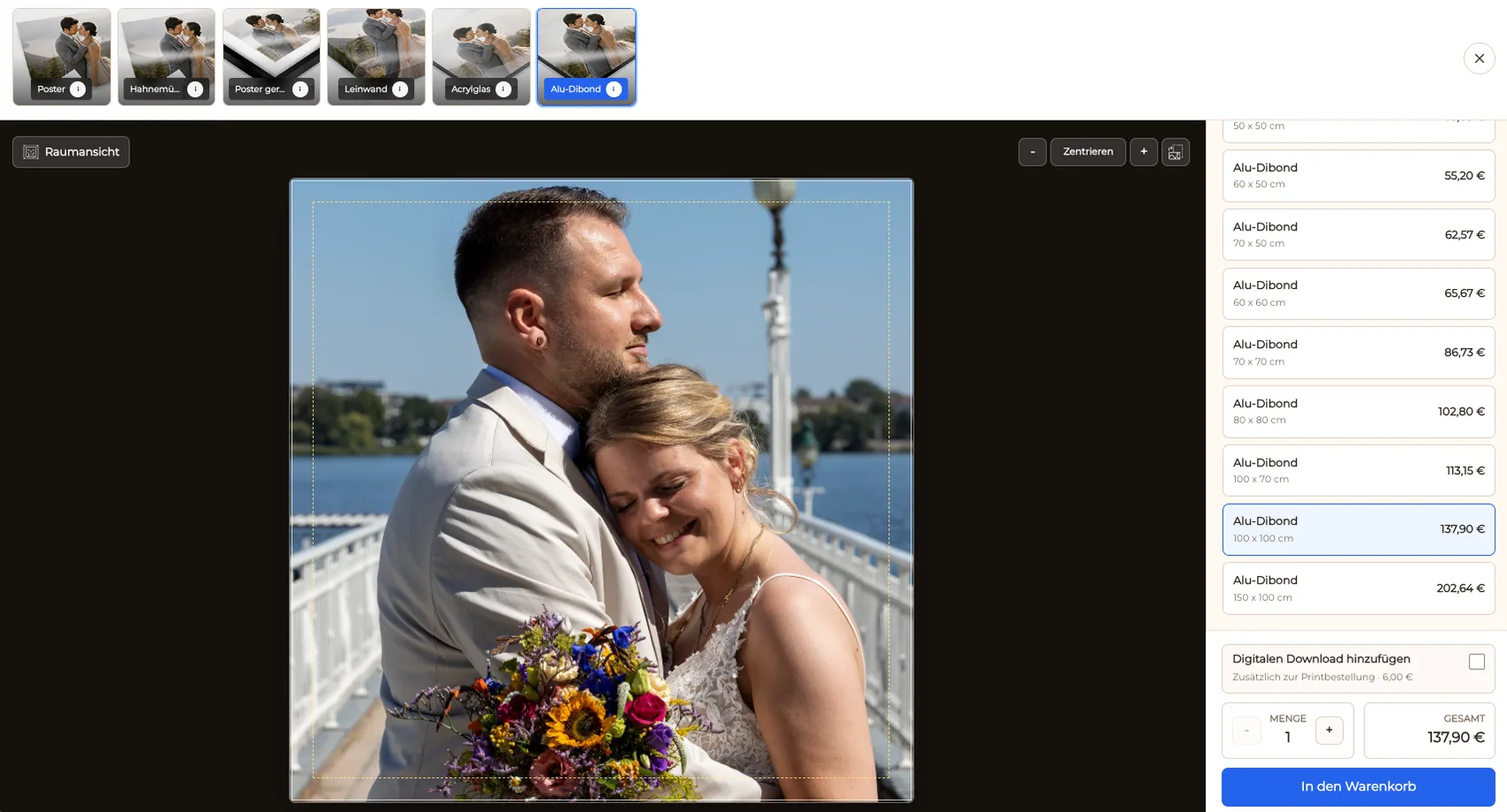
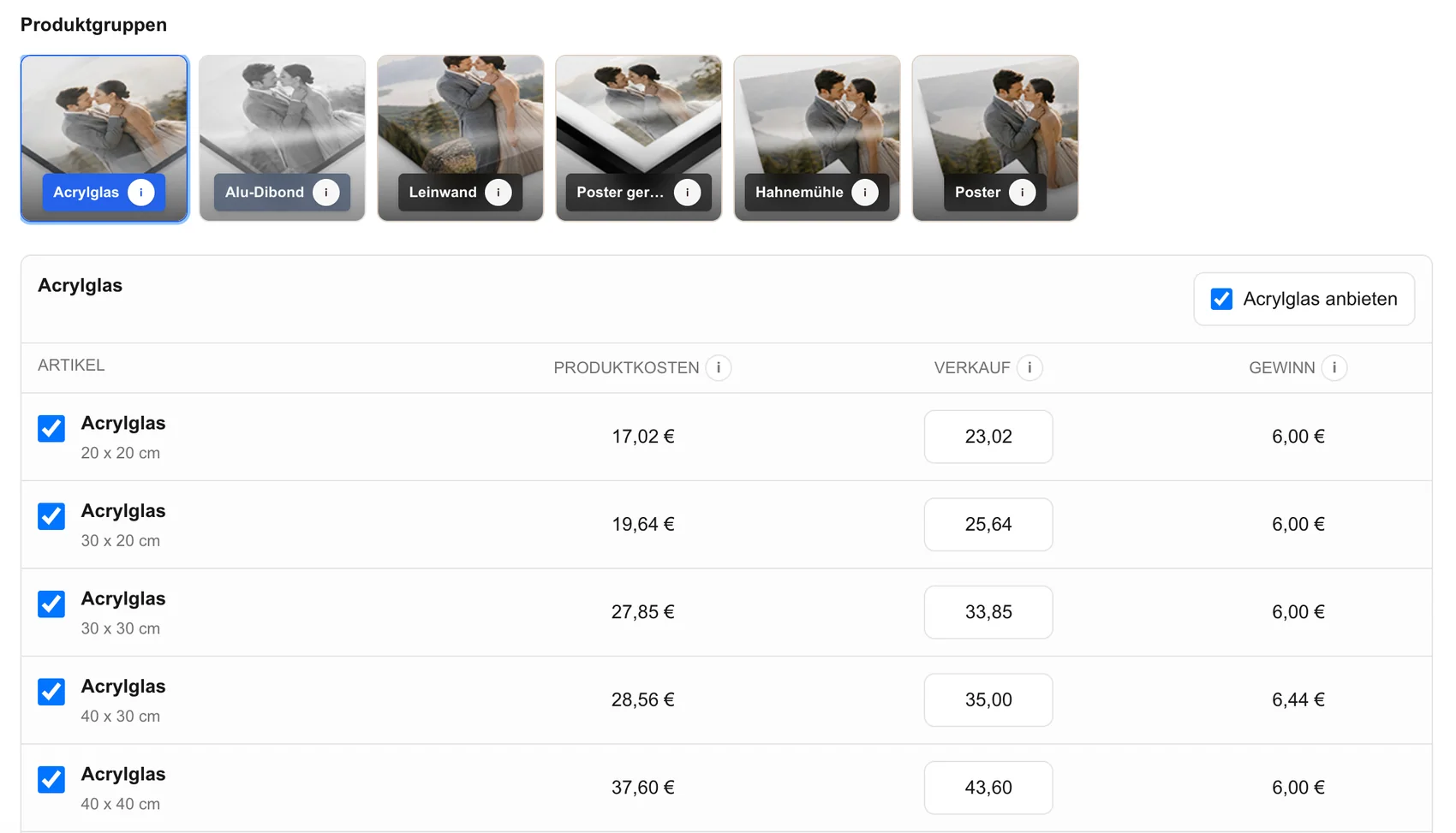
Configured photo products, sizes, and client prices
Configured photo products, sizes, and client pricesThe studio controls which eligible choices appear.
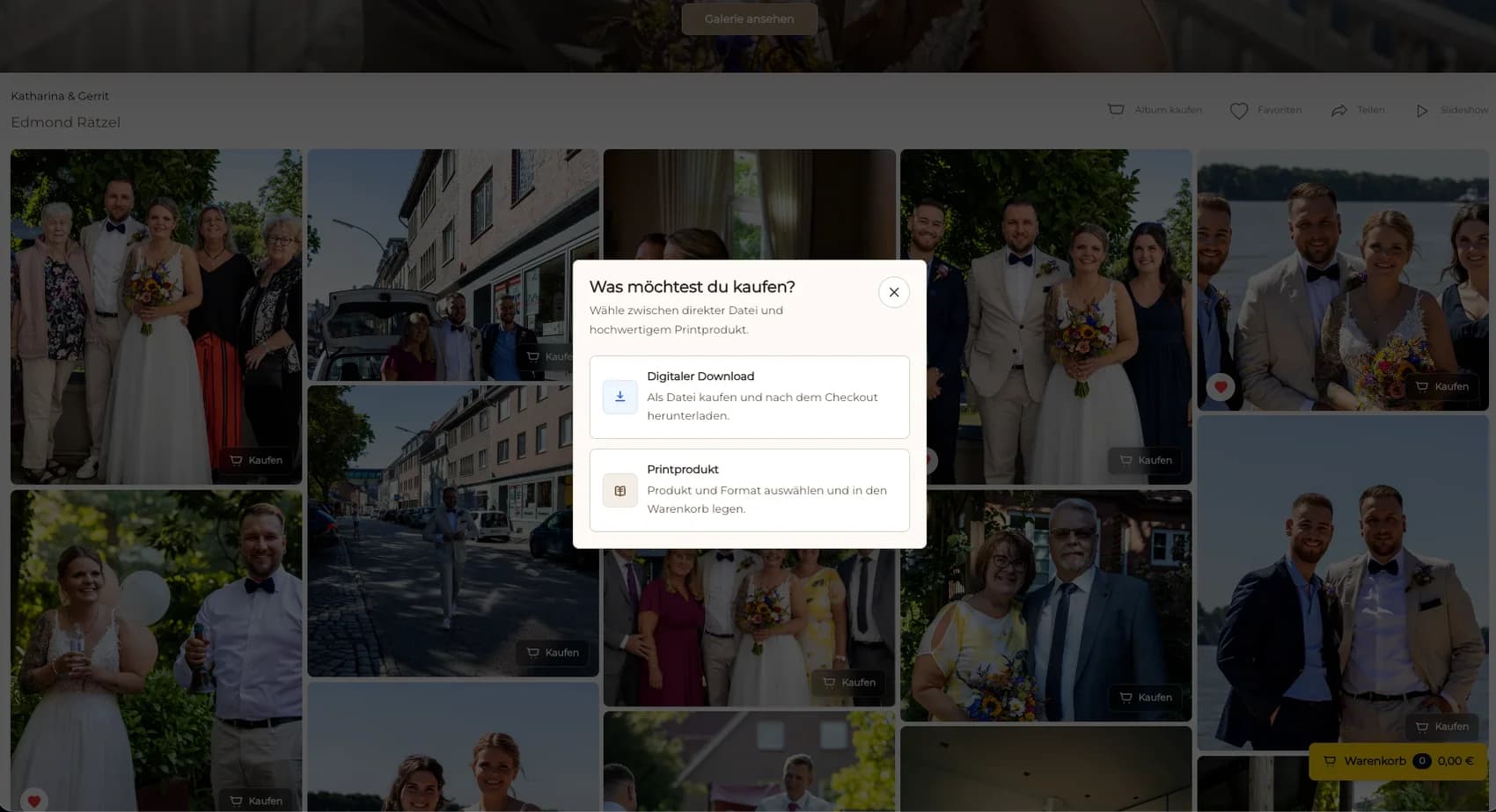
Digital or physical product choice at an approved image
Digital or physical product choice at an approved imageThe package and product boundary stays visible.
Portrait and landscape format context for photo products
Portrait and landscape format context for photo productsOrientation must match the selected photograph and configured product.
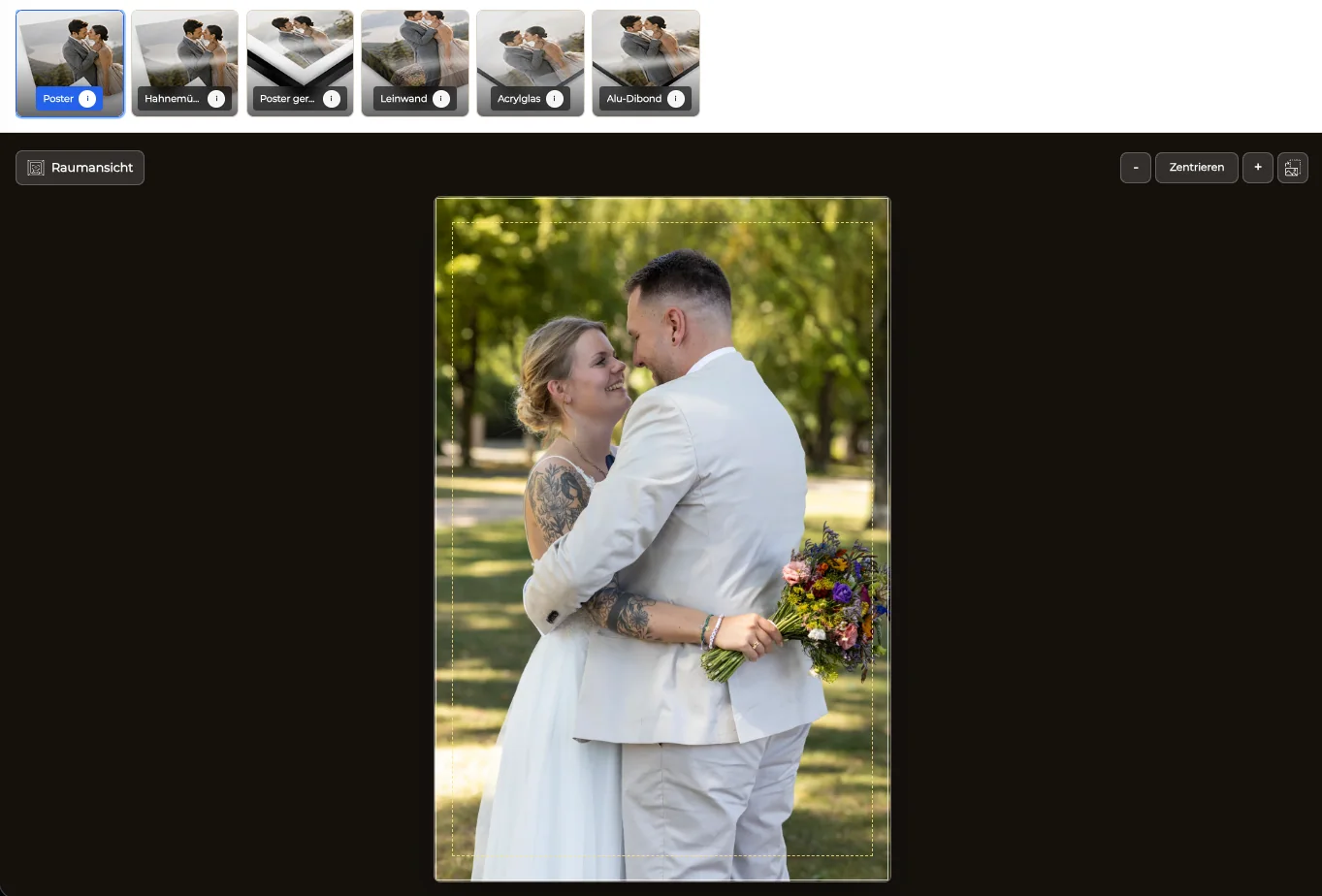
Crop and safe-zone review before a print order
Crop and safe-zone review before a print orderClients need realistic crop guidance before checkout.
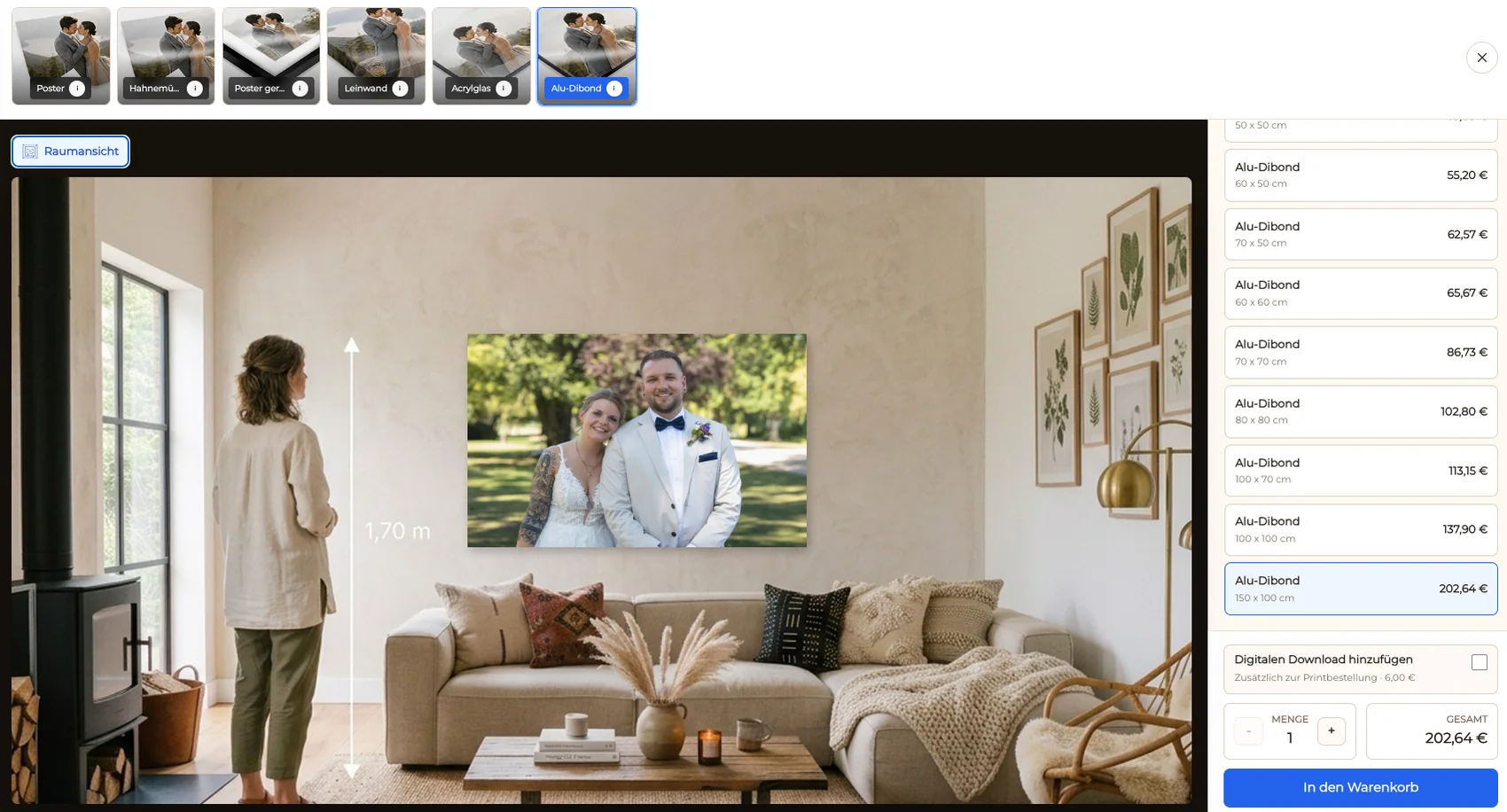
Wall-art room context in a client gallery
Wall-art room context in a client galleryRoom context supports scale discussion without guaranteeing a physical result.
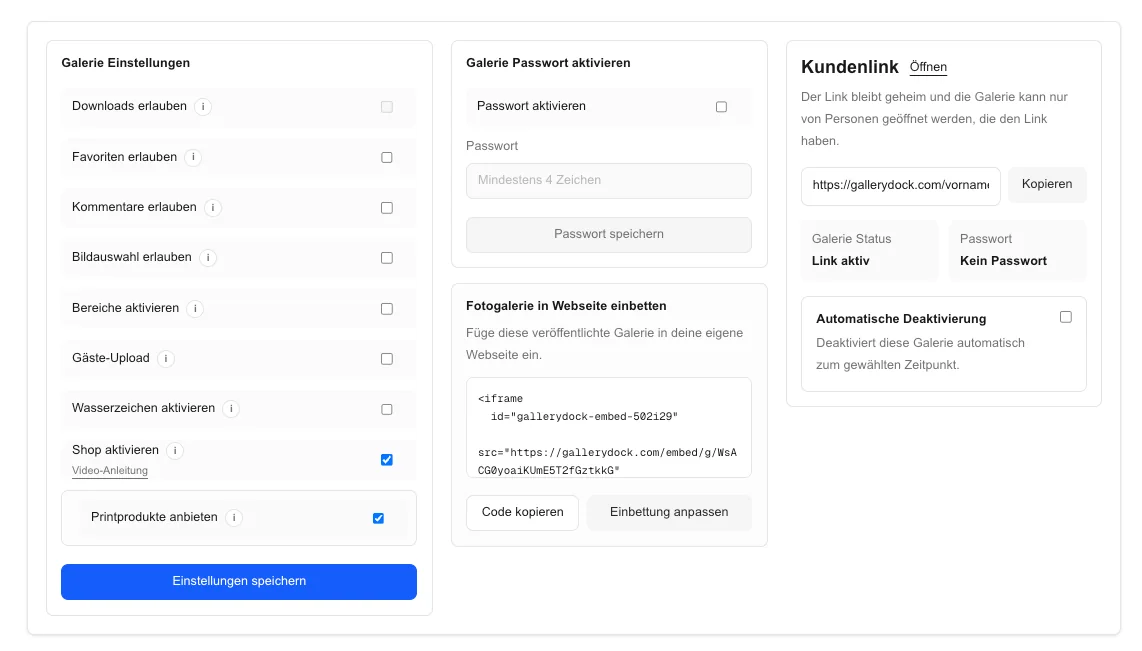
Gallery print-store activation for eligible work
Gallery print-store activation for eligible workThe photographer decides when sales belong in the assignment.
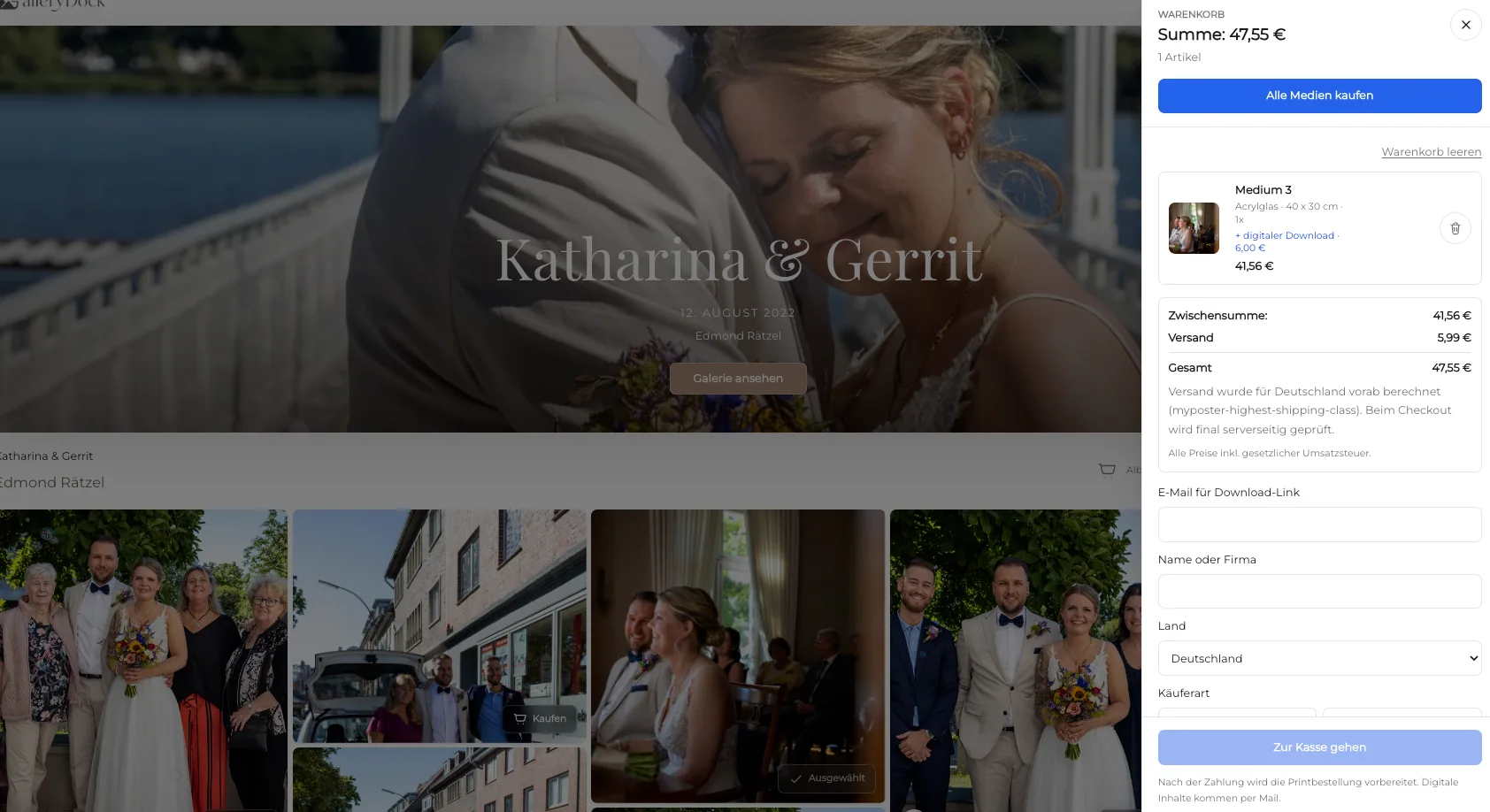
Photo product cart and checkout handoff
Photo product cart and checkout handoffThe transaction should preserve the configured image and product context.

Comparison

CEWE product ordering and a photographer client gallery solve different jobs

Use this comparison as a documented shortlist, then verify changing provider facts on current official pages and test one representative assignment before replacing a working process.

WorkflowBest fitBoundary to verify
CEWE consumer product pathPeople creating photo books, gifts, wall art, or prints through CEWE's current consumer experienceThe photographer does not control a GalleryDock client workflow or inherit CEWE fulfillment inside GalleryDock
GalleryDock client galleryPhotographers presenting commissioned images with selection, feedback, delivery, and optional digital or physical salesThe photographer configures eligibility, products, prices, production route, support, and policies
Separate toolsStudios using CEWE for a particular production need while GalleryDock manages the client-facing assignmentRecords and handoffs must be reconciled manually; no native integration is claimed
Manual consultationBespoke wall-art or album decisions requiring materials, measurements, licensing, or a quoteHigher human effort, but appropriate when a configured self-service product would be misleading
Digital-only deliveryAssignments where the package ends with approved downloadable filesNo physical product is offered merely because the gallery supports it
Controlled pilotOne representative client and product used to validate the complete handoffKeep existing ordering and source-file records until production and support responsibilities are proven

Portrait wall-art decision

A portrait client reviews approved images in context, compares an eligible wall-art option, checks crop guidance, and reaches checkout without translating file names into a separate order email.

Wedding gallery with optional prints

The couple receives the contracted digital delivery and can separately choose eligible prints, while the photographer keeps package inclusions, production, support, and fulfillment explicit.

Studio retaining CEWE for production

The studio may keep a trusted CEWE product path for a specific need while using GalleryDock for presentation and client decisions; it documents the manual handoff instead of claiming an integration.

Frequently asked questions

Questions about this workflow

Do you need a consumer photo-product ordering path or a photographer-controlled client gallery with optional sales?

A CEWE alternative for photographers should be chosen by workflow: consumer photo-product creation serves a different job from presenting commissioned work, guiding client choices, and keeping an optional sale attached to the approved image. GalleryDock does not claim a CEWE integration, automatic migration, production-lab connection, shipping service, or feature-for-feature replacement.

What should I test before changing the workflow?

Use current official CEWE product information, GalleryDock's configured gallery behavior, and one representative client order without assuming shared fulfillment or account data. Test invitation, access, viewing, selection, feedback, the intended sale or delivery action, mobile behavior, support questions, and closeout. Keep the current route available until a representative client completes the new path.

Does GalleryDock replace storage, backup, accounting, or a CRM?

No. CEWE owns its documented consumer product and ordering experience; GalleryDock owns the configured gallery, client context, eligible product presentation, cart, and checkout handoff. Source files, redundant backups, contracts, invoices, accounting, tax decisions, licensing records, and legal documentation remain in the systems responsible for them.

Can I promise the same features as the compared provider?

No. GalleryDock does not claim a CEWE integration, automatic migration, production-lab connection, shipping service, or feature-for-feature replacement. Provider capabilities, plans, fees, limits, automation, integrations, fulfillment, and policies can change. Verify material facts at decision time and describe only the capability actually tested.

How should I introduce the new client path?

Start with one reversible pilot that resembles paid work. Explain what clients can view, choose, comment on, download, or buy; identify what is included versus optional; name the support contact; and preserve the previous link and source records until the pilot closes.

How do I know the workflow is successful?

Measure client comprehension, correct approved image and product, crop awareness, cart continuity, fewer ordering emails, clear production ownership, and documented closeout. Review several completed assignments instead of relying on a demo, one enthusiastic client, or a feature checklist.
Related resources

Pricing

Start free and upgrade when you need more.

Free

Free forever

0 EUR

EUR 0 per month

Perfect for sharing your first galleries professionally.

  • 3 galleries
  • 1 GB storage
  • Photos & videos
  • Image upload: 50 MB
  • Video upload: 750 MB
  • Your own shop for digital sales
  • Sell print products in your shop
  • 15% shop fee per sale
  • Your own profile in client galleries
  • Password-protect client galleries
  • Use your own logo as a watermark
  • Let clients select images and mark favorites
  • Control photo and video downloads
  • Embed galleries on your own website
Free account

Start free, no credit card required

Base

Monthly

Most popular

19 EUR

EUR 228 billed yearly. plus VAT

Ideal for photographers who regularly deliver client galleries.

  • Unlimited galleries
  • 200 GB storage
  • Photos & videos
  • Image upload: 100 MB
  • Video upload: 15 GB
  • Your own shop for digital sales
  • Sell print products in your shop
  • Only 10% shop fee per sale
  • Your own profile in client galleries
  • Password-protect client galleries
  • Use your own logo as a watermark
  • Let clients select images and mark favorites
  • Control photo and video downloads
  • Embed galleries on your own website
  • Hide GalleryDock branding
  • Use your own logo in galleries

For regular client delivery

Pro

Monthly

29 EUR

EUR 348 billed yearly. plus VAT

For photographers managing many projects, videos and growing storage.

  • Unlimited galleries
  • 1 TB storage
  • Photos & videos
  • Image upload: 100 MB
  • Video upload: 30 GB
  • Your own shop for digital sales
  • Sell print products in your shop
  • Only 5% shop fee per sale
  • Your own profile in client galleries
  • Password-protect client galleries
  • Use your own logo as a watermark
  • Let clients select images and mark favorites
  • Control photo and video downloads
  • Embed galleries on your own website
  • Hide GalleryDock branding
  • Use your own logo in galleries

For regular client delivery

Test the commissioned-gallery sales path

Create a representative GalleryDock assignment and verify presentation, product choice, crop context, cart, checkout handoff, and production ownership before changing the studio standard.

Create a free account